My favourite books from 2025
I’ve read 54 books this year – a slight dip from last year, but still at least one book a week. I try not to set myself rigid targets, but I hope to reverse the downward trend in 2026.
I’m a bit disappointed in the books I read this year; compared to previous years, there were only a few books that I feel compelled to recommend. I’m not sure if it was bad luck or sticking too close to familiar favouites – but I can’t help notice that all of this year’s favourites are from new authors. That feels like a sign to look further afield in 2026.
What saved the reading year was community and connection. My a book club just passed its third anniversary, and the discussions are always a highlight of my month. In particularly enjoy the conversation if it’s a book we all liked – it’s more fun to celebrate what works than to tear a book to shreds. Two of my top picks below come from the book club list.
I also found some unexpected serendipity: Lizzie Huxley-Jones’s festive romance Make You Mine This Christmas has a meetcute in a bookshop in St Pancras station. I use the station regularly so I know the shop well, and it’s where my partner and I took our first photo together as a couple, at the beginning of our second date.
I track the books I read at books.alexwlchan.net, and writing the annual round-up post has become a fun tradition. You can see how my tastes have changed in 2024, 2023, 2022, and 2021.
Here are my favourite books from 2025, in the order I read them.

Service Model
by Adrian Tchaikovsky (2024)
What if the robot apocalypse happened, but nobody told the robots?
We follow Charles, a robot butler who finds himself unexpectedly unemployed, and he travels through an apocalyptic wasteland to find a new purpose. In a world mostly devoid of humans, he struggles to find another household to serve. It’s a dark and absurd journey which I very much enjoyed, and the style reminds me of Douglas Adams. This world isn’t tragic, but absurd.
Beneath the lyrical and humorous style are messages about automation, class division, and our attitude towards work. The world is full of robots who are doing things because that’s Their Purpose, with no thought for who the automation is serving or whether it’s still necessary.
If you enjoy this, you should follow up by reading Human Resources, the prequel short story about a “human resources” department that only exists to fire all the humans.
I’d also recommend The Incomparable podcast’s Book Club episodes; I read Service Model on the strength of Jason Snell’s recommendation.

How You Get the Girl
by Anita Kelly (2024)
A charming sapphic romance between a basketball teacher and a professional player.
Elle is a famous basketball player who’s proud and confident about being queer, but she struggles to be a foster parent to her niece, Vanessa. Julie is a capable high school coach who bonds well with her team, but feels unsure and uncertain about her queer identity. They both look up to the other, and are looked up to in return.
It felt like a very balanced romance, and I enjoyed our discussion of it at Ace Book Club. It hits all the classic sapphic tropes, and it has a feel-good ending.
My particular reading was enhanced by the annotations – my partner read this book first, and she highlighted passages with comments like “this seems familiar” or “remind you of anyone?”. Sadly that’s not a transferable experience, but I can tell you that I enjoyed it.
Surprisingly, I didn’t enjoy Anita Kelly’s other books. This book is the third in the trilogy, and I tried to read the other two – one of them was so-so, and the other I gave up on.
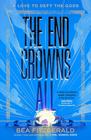
The End Crowns All
by Bea Fitzgerald (2024)
A sapphic retelling of the Trojan War, in which Cassandra’s curse is cast by a petty Apollo who just wants sex, and an enemies-to-lovers romance between Cassandra and Helen.
I really enjoyed this. It’s a well-written story and I enjoyed the first-person perspective of the two protagonists. It builds well towards its conclusion – a lot of stuff that becomes relevant later is established early and builds towards the end. Apollo’s curses on Cassandra, the gods forcing a narrative on Troy, how the story eventually deviates from the conventional myth.
The book has modern sensibilities, but retrofits them in a thoughtful way. It discusses consent, rape culture, and asexuality – in particular, Cassandra is implied to be ace – but never uses those words explicitly. These themes fit into the narrative, and don’t stand out as twenty-first century terminology or ideas shoved into Greek myth.
This was another book club pick, and I’m planning to read Bea Fitzgerald’s other books next year.

Finding Hester
by Erin Edwards, Greg Callus, Rose Crossgrove, and others (2025)
This is the true story of Hester Leggatt, a woman who wrote fake love letters for Operation Mincemeat during World War II, then became a character in a hit musical.
Unlike the men in the story, almost nothing was known of Hester when SpitLip wrote the musical version of Operation Mincemeat, except that she wrote the fake love letters. Her character has the most emotional song in the show, but the fictional version had to be invented from scratch.
A group of fans were dissatisfied with this gap in history, and tracked down the real Hester. They traced the initial mistake to an interview that misspelt her name as Leggett instead of Leggatt. Once they knew the correct surname, they went through paper archives, old school records, even contacted MI5 – all to reconstruct her life story.
The book weaves this discovered history into a narrative, which is organised it into a coherent and readable story of Hester’s life – her place of birth, her career before and after the war, her love life, and even coincidental similarities to her fictional depiction.
I’m biased because several of those fans are dear friends, and I enjoyed watching their work from the sidelines – but I enjoyed reading the details even more so.