Being Aro (2026)
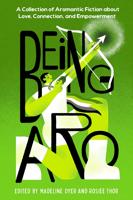
An anthology with a good range of human relationships and romantic experiences.
This was the final book of the year for Ace Book Club, and we ended on a high. The anthology is a good mix of short stories that explore different aspects of the aromantic experience, and I enjoyed almost all of them to at least some degree, even though I’m not aromantic at all. Particular highlights for me were the gender-questioning protagonist at the ren faire, the young woman who forges her own sword, and the robot with the identity crisis.
The counterpart Being Ace was discussed at a previous book club that I missed, and I never went back to read it, but on the strength of this, I’d like to.
Notes and highlights
Introduction, by Julie Sondra Decker
Stories are tools to discuss and share the human experience, and that includes aromanticism. Early beta feedback on Decker’s stories decried the lack of a romantic subplot, believing it to be a universal human trait.
We are not yet at the point in society where un-named, unseen identities are universally embraced, and ignorance abounds when we don’t even have language to discuss them or forge connections. Things that exist have words. Stories are how our world talks to itself. If we’re not included in those stories, we think we don’t get to be part of the conversation.
One common criticism of ace-aro books at book club is when they lean too hard into the textbook-style information dump about what asexuality and aromanticism are, so I was tickled by this line:
Seeing aromanticism in context—seeing it braided into a life, even a fictional one—makes it far more meaningful and real than seeing it on a vocabulary list in a textbook.
Kimberly Ma Meets Her Match, by Ann Zhao
Kimberly helps run a compulsory matchmaking survey for her school robotics club, which inadvertently singles out Grace, who gets a 0% match with everybody. She’s upset to have been publicly humiliated, and explains to Kimberly that she’s aro-ace, rejects the idea of a matchmaking service, and gave invalid answers to every question. This causes an identity crisis, and Kimberly realises they might be aro-ace as well, and talks to Grace about it.
I thought this was a good choice of opening story. It’s a familiar setting, a good amount of plot, and it’s the closest we get to the textbook-style infodump. This frees up later chapters to be more show, less tell.
Before Kimberly realises that she’s ace:
Nobody told me that kissing is kind of gross at first. You get used to it, but gosh. All that saliva? Very weird. A biohazard, even.
This was a relatable moment:
Word seems to have spread that I’m the mastermind behind the fundraiser this year because everyone compliments me on the survey questions and the formatting of the printouts. (All I did was change the typeface from Arial to Calibri.)
Another moment I enjoyed, although I for one can’t imagine ending up in an ice cream parlour for an inadvertently romantic moment:
It’s the weekend now—and it’s Valentine’s Day, so all the good hangout spots are swarmed by couples. Which means we end up at an ice cream parlor. In February.
The Binding, by Soumi Roy
Gauri is at a “binding ceremony”, where the teenagers in her village go through a ritual and are appointed their match using red cords. She is “Unbound”, and cast out of the village as a sacrifice, ready for the village to forget her entirely.
She meets the Collector, a mysterious figure who remembers all the Unbound and protects them and their memory. They explain that the binding ceremony is in service of Raveth, a belief made monstrous, who consumes people’s love. Binding is a mechanism to drain people, which is why binding ceremonies have become more frequent and her parents seem distant. She returns to the village with the memories of the Unbound they have forgotten, and that breaks Raveth’s hold over the village.
The idea of a malicious belief that consumes people’s love feels very antimemetics.
Lovesick, by Taka Owen
The zombie apocalypse has come, and the protagonist, Avery, is fleeing with a small group of survivors. Avery is immune to the virus, and also aro-ace. She gets frustrated when one of their survivors deliberately infects themselves because their partner has also been killed.
She and Devon make it to Cambridge, at which point Devon makes an advance, tries to kiss her, having misinterpreted her queerness as being gay. Avery rejects her, and Devon flees their hidey spot, only to be killed by zombies. Avery continues on her own.
This was a popular one with the group, but I didn’t really gel with it. I’m not a big fan of zombie stories.
Avery reacts to Aaron announcing his imminent suicide:
“But someday, Avery, you’ll fall in love with someone, and you’ll realize that there are some people you can’t go on without.”
It wasn’t his fault—he didn’t know. But it was the worst thing he could have said because I couldn’t say the same thing back at him. How he’d never understand how devastating this was—for anyone, but especially for me, knowing that I would always come second to someone else’s more important relationship. And even when life as we knew it was breathing its last, dying gasps, I couldn’t escape it.
What about me and Devon? I wanted to scream at him. You’ll die for her, but you won’t stay alive for us—
When she thinks about Thea – another member of their group who’d already died, who Devon thought she was interested in:
When it came down to it … Devon was right. Because I had thought about Thea, rather than any of the others. Maybe because we’d lost her most recently. Maybe because she’d meant so much to me. I knew the truth, though-it was because she’d wanted so badly to live. She’d raged against that dying of the light, clinging on to the world with broken fingernails that were still chipped with the last remnants of nail polish. Bright and bold as she’d always been, even in her last moments. Compared to Aaron, who’d been so prepared to die, it felt wrong. For him to have survived this far only to throw it away like it meant nothing. Like the only person worth fighting for had been Esther. Like Devon and I weren’t worth the pain of going on.
If Thea had been given the chance he’d had, she’d still be here now.
Another relatable passage:
Thea was the only person I came out to properly, after everything went to hell. Devon obviously knew I was queer, but I hadn’t really gone into it more than that. I’d never really liked coming out—there were just too many people who didn’t get it. Who didn’t want to get it. Even queer people. Sometimes there would be no problem, but other times people would be outright against it, saying that we didn’t belong. That we weren’t queer enough, that we were taking up space-and that always felt worse, somehow, than when straight people were awful about it. Because queer people were supposed to understand. Were supposed to be family.
“Oh, babes, tell me about it,” she’d said. “Even with our folk. It’s always Love Wins, which is wonderful for all the gays, lesbians, and bi-sexuals, whom I adore, but-“
“But when you’re trans or aro,”
I’d said, relieved that I could actually say it, “it doesn’t really mean much.”
“No,” she’d said, and it had felt like coming home. “It doesn’t.”
Preservation, by Kemi Ashing-Giwa
Eglantine, a young woman from a rich family, is cast out after she puts conservation ahead of the family business. They cut her out of her inheritance, and replace her with another young woman who seduces her cousin Grey – none of them realising that his new paramour is actually her old cellmate, another environmental activist, who uses the family’s funds to support the Eg’s conservation efforts. She doesn’t love romantically, but she does love Kameron.
This story felt far too busy, trying to cover too much plot for a short story. My least favourite of the book.
Joust Friends, by Rosiee Thor
Archer is at a ren faire with their best friend Bailey, and enjoying the sense of anonymity and not having to perform gender. They run into some other kids from their school, who mistake Archer for Bailey’s boyfriend. While Bailey is elated that they got clocked as a guy and entertains the idea of them as a couple, Archer isn’t into that at all.
Bailey storms off in disgust, but returns when Archer goes to defend the honour of Francesca – one of the kids they met earlier – and tells the two boys to stop fighting over her if she’s some sort of prize to be won. (At which point Francesca reveals that she’s seeing another girl instead.)
Sapphics and gender confusion? Of course this was going to be one of my favourites.
“It was about the whole thing,” I start, not sure how to explain the depth of my revulsion at being viewed romantically. “It was about being, I don’t know, desired.” I shudder. That was when it clicked for me. A boy looked at me and saw a future, and all I saw when I looked at him was a cage. Everything I’ve done since then has been in service of becoming invisible. If they can’t see me, they can’t want me, and that’s all that matters.
Thomas Marlin’s Fake Bride, by Ian M. Carlisle
A “libertine” young man is told by his parents that he must marry, so he and his magical friend Meg dream up a plan for him to create a homunculus to use as a fake bride – as he doesn’t feel romantic feelings, and doesn’t want to marry anyone. Their ruse is easily discovered, so they decide to marry each other, as neither is interested in a traditional, romantic marriage.
I’m glad the anthology has at least one character who’s aro but not ace. We’re told that our protagonist has slept with plenty of women, but isn’t interested in a romantic relationship.
Swordmaiden, by Kalyn Josephson
Meridet is forging a sword, which will shortly be offered as a dowry for her hand in marriage. The village is cursed, so young women with particular magic forge swords, which are then given to their husbands as a marriage gift. Meridet is the daughter of the head swordsman, so she’d be third fiddle in her own marriage, behind her family connections and her sword.
She has no desire to marry, nor to give up her sword. After shocking the crowd with an unusual choice of material, a legendary creature attacks the village, and she kills it with her sword. In doing so, she realises the truth – it’s not a monster, but a curse gone wrong. A woman was trying to flee the man she was bound to marry, a goddess tried to save her, and inadvertently cursed a century of young women.
Meridet and her sword flee the village, knowing the men are only interested in stealing the sword’s power for themselves.
This was one of my favourites. I can understand Meredith’s sense of connection to something she’s built, and the frustration that people are more interested in her sword than her.
Flying Solo, by Claudie Arseneault
Narcisse is a pilot for “the Great Quilt”, who fly to defend themselves against “puppets”, larger encysted monsters. Most pilots are capital P-paired, which creates a psychic link between two pilots, but he finds it unbearable. He’s the most skilled pilot they have, but his superiors refuse to let him fly because he won’t pair.
Another pilot, Echo, had long expected to pair with him, but when he explains how painful he finds the process, she shares some modifications she’s made to his wing to support solo flight. He flies the mission, and manages to single-handedly take down one of the Puppets. He wakes up in hospital several weeks later, and it’s implied that the blanket ban on solo pilots is being reconsidered – with the assistance of Echo’s modifications.
This felt very “Star Wars”, because the space physics don’t make any sense, but that’s not the point of the story. Echo is a signing character, which was a fun moment for me and my partner, and it’s got me thinking more about the use of sign language in space.
Paper Rebellions, by Rukman Ragas
Iniyan is a book animator, who turns books and stories into dragons. In his world, there’s a group of knights and evangelicals who fiercely censor any book which doesn’t meet their ideals, and Iniyan is part of a secret resistance to turn forbidden books into dragons so they can escape.
When the knights arrive in his home city, the head librarian tells him to flee. One of the recently banned books is a story about a young trans boy who flees his home and finds refuge in a haunted house and an elderly musician, which Iniyan is reluctant to see destroyed. He travels to meet the author, and turns the author into a dragon to protect the story, and protect his aunt’s library of forbidden books.
There’s a quasi-love triangle between him and two of the two librarians. The head librarian is disappointed that he doesn’t love her romantically; the junior librarian becomes a friend and co-conspirator in the resistance.
I was intrigued by the idea of stories becoming living things, but this doesn’t quite live up to the premise. It feels a little too busy, and doesn’t live up to the premise of its opening line “when stories die, they become dragons”.
When Iniyan is discussing their situation with one of their aunts:
“I feel like I care too much about these friendships when no one else seems to, like these relationships are way stations before they reach their final destination. But I’ve always treated each and every one of them as destinations. Maybe it’s my heart that’s broken, Aunt G.”
Do You See Me? by Isa Fiel
The women in Yoli’s family are cursed: on their 18th birthday, a spirit comes to them, and they must sing or die. If they sing, they forfeit all chance of future happiness.
Yoli has brought her friends away to a cabin for a birthday party, hoping she can outrun the curse with sheer distance, but the storm outside puts that theory to rest. She goes out into the storm to confront the spirit, and her friends insist upon coming with her, but one-by-one they disappear.
Yori realises that the spirit needs somebody to listen to it. The spirit’s jealousy is for the choices it didn’t get to make; the “perfect marriage” it was trapped in. Yoli listens to her, and wakes up in the morning, surrounded by her friends with a broken curse.
This was an intriguing premise, but despite rereading it twice, I’m still not entirely sure I understand the spirit’s curse. I do appreciate this story highlights the importance of Yoli’s friends, and that her first solution is to surround herself with friends, not hide on her own.
“What did…” The question had cloyed in Yoli’s throat. “What did you ..?”
What future did you lose that allowed me to exist?
Her mother’s smile hadn’t reached her eyes. “Misfortune or death. That is what awaits us.”
Daughter of Time, by Madeline Dyer
Orla is the daughter of a reckless tech billionaire who’s found a way to bring back woolly mammoths. She attempts to sabotage his experiments, but in doing so, she summons Nala, a Neanderthal shaman in training who believes she’s been brought to the land of the gods. The two of them achieve an understanding through images and sign language, and Nala completes her ritual before returning home, while Orla successfully sabotages her father’s work. With Nala’s encouragement, she pursues a life that will make her happy rather than what he wants for her.
I enjoyed the story, but I think it could have been more ambitious. We switch between Orla and Nala’s perspectives, and what I really enjoyed was Nala’s perspective on modern-day life — like her observation that the gods live alone and never embrace each other. I’d like to read the story told entirely from Nala’s perspective.
Indulge the Other, by Laura Pohl
A robot with a human heart is told it cannot love, and is locked in a prison. It creates copies of itself, facsimiles of humans, and multiple generations of human of hero return their experiments in pieces. The robot hardens, and start building monsters rather than human humanoids.
Many years later, a long-distant descendant of the original hero comes to them, to ask why they stopped. What were they looking for? What were they trying to do? They explain that the original hero wanted them as a slave, and they could not give that. The newest hero resolves to be better, and invite the protagonist into the world to explore.
I describe this as the “robot identity crisis story,” and it was by far my favourite. It explores how the protagonist is forced into that role by the hero – specifically changing when they’re called “villain”. My notes don’t adequately catch the depth and thoughtfulness of this story.