Birds Without Wings (2004)
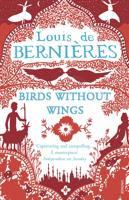
A richly described but rambling story about a small village in Anatolia.
This is a story set in the fictional village of Eskibahçe in Anatolia, part of modern Turkey, sometime in the early 20th century. It describes a region and a period of history about which I know very little, including the World War I and the Greco-Turkish War. It’s full of rich and colourful descriptions, but I’m not sure how much I actually learnt.
I enjoyed the rich and detailed descriptions of village life, and I could easily picture the places described. It’s portrayed as a picturesque, idyllic place that would happily continue as-is, if not for the intrusion of the outside world. I enjoy stories with a strong sense of location, and this one has it in spades.
The initial calm of the village is contrasted with the horror of war when characters are conscripted to the front lines. Their wartime service is no less vivid, and the stench of death and rotting corpses is presented in unedifying detail. The war is portrayed as anything but glorious.
I like the characters, but some of their narratives are quite simple and drawn out. We’re told that a character feels something, but a lot of that emotional development happens “off-screen”. I like their reflections on mortality and life that come towards the conclusion, but it takes a long time to get there.
The ultimate fate of many of the named characters is left a mystery. Lots of people leave the village for lands unknown – whether by choice or by force – and are never seen again. There’s an epilogue where some of their stories get wrapped up, but others were left to wonder. I like that choice. It feels authentic to the time, when lots of people couldn’t read and write, long-range communication was unreliable, and if somebody left the village, they could just disappear.
The book does very little to explain the region or history, and instead trusts you to pick things up from context. This is only partially successful.
In the village, the explanation-free approach works well. I was able to picture the place very well, and I was able to understand unfamiliar words based on context clues alone. For example, the “meydan” is the village square, and the “haremlik” is the women-only area of a home.
The history left me more confused, and I’m still not sure I really understand what happened. The fictional lives of the villagers are interspersed with the real story of Mustafa Kamal, but the detail drowns out the timeline.
That’s a microcosm of the book overall. It’s rich, detailed prose, but it takes a long time to get anywhere. I put off reading this book for years because of the length, and while I enjoyed reading individual chapters, it felt like a bit of an endurance read.
Quotes and highlights
Chapter 50 “The Exchange”:
This was the age when everyone wanted an empire and felt entitled to one, days of innocence perhaps, before the world realised, if it yet has, that empires were pointless and expensive, and their subject peoples rancorous and ungrateful.
Chapter 65 “Karatavuk at Gallipoli”:
I will tell you a secret, which is that almost no soldier truly believes that he will be killed. This is because it is impossible for the human being to imagine that he is dead, and this is because he is always alive and present in the act of imagining. This inconceivability of death is what makes it possible for a soldier to fight. He sees his comrades die, but he thinks himself immune, and this fatal lack in his nature makes him a good fighter. Even a man who has decided to die on purpose and become a martyr does not really believe in his own death.
Chapter 75 “Mustafa Kemal (17)”:
The British make token efforts to restore order, but they lack the will to do it properly. They are beginning the long process of realising that to be the world’s police force and to have the largest empire in the history of the world is expensive, tiresome and unrewarding.
Chapter 91 “Exiled in Cephalonia”, when Drosoula must decide whether to go to Greece with her parents and the other Christians being taken away from the village, or get on a boat with her husband:
He looked at me and replied, “I give you the choice. I don’t order you. You are my wife, but I don’t order you. I could order you, but I don’t. If you want you can go with your mother, and meet me in Cephalonia, when you find the family of Drapanitikos.”
It was then that I made the most difficult decision of my life. I didn’t choose between one duty and another duty. I chose between one kind of love and another, and I never saw any of my family again, and I never found out what happened to them.