Hiding the Elephant (2004)
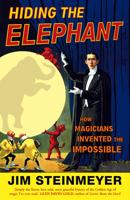
A detailed history of the Golden Age of magic.
I picked this up on the recommendation of Sam Reich, who uses a lot of elements of stage magic in Game Changer. It describes famous and notable magicians over the span of a century or so, explaining how they developed certain illusions and refined their stagecraft.
It’s not an area of history I was particularly interested in beforehand, but I found it interesting and engaging.
The book blends history and technique, but avoids being too technical. This isn’t an explanation of how to perform magic tricks; it’s an explanation of how those tricks were developed. For example, it tricks using mirrors, and how one magician would copy another and improve upon their design. It tracks the evolution of ideas, not their exact implementation. There are diagrams to explain certain concepts, which are much clearer than a wall of prose.
Reading this book, I’m struck by how much stage magic has changed – it has trends and fashions that I hadn’t thought about before. Early trends were for complex apparatus and mechanical devices, then performers started to highlight their lack of equipment. Some shows made the trick the centre of the performance, while others incorporated them into a narrative or a play. The use of attractive women as assistants is a (relatively) modern invention.
It makes me wonder how stage magic will continue to evolve, and what fashions today might seem antiquated in future. For example, the book only describes male magicians; women are exclusively assistants or wives. Today, many women perform as magicians , but I think the trope of the female assistant is still a common one. Perhaps that will disappear entirely?
The book stops in the mid-20th century, and I’d have enjoyed an epilogue that discussed how trends have continued.
Notes and highlights
Introduction
The author’s thesis: you can’t understand the history of magic by considering personalities and techniques as separate things; you have to consider them together.
Chapter 1: Overture
Houdini’s Vanishing Elephant Trick at the Hippodrome.
Houdini was a man of spectacle and excess, who desperately wanted to be part of the world of magicians. Contemporary magicians liken him to a spoiled child. Audiences are impressed by his escape acts, which rely on meticulous planning and preparation. His magic shows are comparatively crude, relying on off-the-shelf tricks.
Compare with Howard Thurston, a contemporary magician who was as well-known as Houdini at the time, but who has since faded into obscurity. He understood the importance of creating a rapport with the audience, and often used children in his acts. He relied on their emotions to create a bond with the audience.
Chapter 2: The Ghost
Learning how science works teaches us something, but it also takes something away.
One of the earliest optical illusions used by magicians was “The Ghost.” Invented by Henry Dircks in 1858, it used mirrors to create the illusion of a ghostly presence on stage, which the real actors could not physically interact with. His initial design was impractical, requiring theatres to be redesigned and for audiences to be seated on a balcony above the stage.
In 1862, John Henry Pepper adapted and modified the design so that it could be viewed by audiences at the same height as the stage. The same technique was then copied and used in many theatrical productions as a form of “phantasmagoria”.
Page 21:
Sometime around the fourth grade, I was told in science class that the reason the leaves turned red was that the chlorophyll in the leaf had died in the autumn, revealing a bright color. I appreciated that the mystery had been completely solved and I could stop wondering about it.
Unfortunately, science often serves the purpose of actively teaching us to stop wondering about things, of causing us to lose interest. Of course, it’s good that we take things for granted. The world would be impossible to bear if we were constantly curious about all things, if we woke up each morning wondering if gravity were still in effect. Still, trying to recall the leaves and fourth grade science, I now have to admit that I don’t quite understand why leaves turn red. If I’m really objective about it, it still doesn’t make sense to me. I was simply told that it makes sense to scientists, who have figured it all out. I learned to stop being intrigued about the leaves. But do red leaves “make sense”? Or is sense assigned in retrospect? Are leaves red because science says leaves will turn red, or does science say they will turn red because they do turn red? In fourth grade I was given the impression that I had been given a bit of sophisticated scientific information. I now realize that, in the process, something was also being taken from me.
Chapter 3: A New Type of Magic
In the Victorian era, the Davenport brothers devised a locked cabinet act in which “ghosts” would untie them and move around the room, shrouded by darkness. This was part of a Spiritualism movement.
Acts that hit our love of ghosts were not uncommon, but making it work in the more scientific Victorian age was less common. Although the Davenports were frequently exposed as frauds or run out of town, their act was a commercial success.
Later in life, Houdini was inspired by and met Ira Davenport.
Chapter 4: The Formula for Invisibility
An architect Tobin devised three methods of invisibility on stage:
- Proteus: a cabinet with folding mirrors and a centre pole that allows a performer to hide themselves in the back quarter triangle
- The Sphinx: An actor pokes their head through the floor of a three-legged table into a box, with their body concealed by mirrors between the table legs
- The Oracle of Delphi: a floating head with a large collar, concealed by a mirror which can be moved on and off stage
These were early ideas in the world of optical conjuring, and among the first use of optical illusions on stage.
Chapter 5: The Chief
Magicians rely on deception, but most avoid telling outright lies, preferring to omit key details and let the audience fill in the rest.
One notable exception is John Nevil Maskelyne (aka “The Chief”), a famous magician who got started in Cheltenham. He had a number of tricks, including a mirrored cabinet, which evolved into a 30-minute play: a farce on the village green with a captured gorilla.
Another show featured an automaton powered by a hidden operator and air pressure, for which a large glass cylinder “proved” that there were no wires or strings controlling the machine – but the same glass cylinder was carrying the air pressure. He frequently lied or misled in his performances, but was highly respected by the magicians of the day.
Chapter 6: Two Wizards
Magicians rely on our assumptions. For example, a magician might open a paper bag from a grocery store in the conventional way, say nothing, and leave it to us to assume that it’s an ordinary bag. If they said, “look, an ordinary bag”, we’d get suspicious. This only works as long as that style of paper bag is commonplace.
This makes children a poor audience for magic – there’s lots they don’t know, and lots of things that seem quite obvious to an adult wouldn’t make sense for a child.
Charles Morritt was a magician who worked initially for the Maskelynes, but then went independent, creating his own acts. One act involved his sister Lillian. She played the part of a psychic, who could see the object he was holding in the audience – but unlike previous versions of this act, which used a verbal code, they used the precise timing of silences to silently communicate.
Morritt had a reputation for being brash and a little bit snappy; his acts were too fast, and didn’t give the audience time to soak in what was happening. His career became scatty, dogged down by drink and unreliability, and he died in 1910.
The gap in the Maskelyne organization left a gap for a new musician: enter David Devant. Devant was a young, ambitious magician who wasn’t content to live in the Maskelyne’s shadow. He experimented with projectors and his own spells, and soon left the organisation on tour to pursue his own career.
Chapter 7: Father and Son
There are trends in magic. For a while, magicians leaned on very elaborate contraptions, then in the 1800s, focus drifted back towards simpler setups, which explicitly highlighted the lack of apparatus, and focused on the magician’s skill – sometimes without the necessary showmanship.
One of the most influential magicians was Robert-Houdin. “His revolution in magic was one of taste, degree, and selection.” By today’s standards he used a lot of paraphernalia and mechanical devices, but his skill was integrating it into performances. The book describes one trick in which he progressively vanishes a handkerchief, egg, and a lemon, then makes them reappear on a growing tree. This relies on several well-known tricks, but nobody else had blended them together in quite the same way.
His path into magic is somewhat unclear. He started as a watchmaker, then his memoirs describe a mysterious magician, “Torrini”, who took him in and taught him the ways of magic, but it seems almost certain that Torrini is a fiction made to justify the leap from watchmaker to the less reputable career of magician.
One notable moment was when he was hired by the French government to put down an uprising of tribes in French Algeria in 1856. He used a “heavy/light” chest, which was powered by an electromagnet (not a well-known technology at the time). He claimed the ability to “drain a man’s strength”, and even passed an electrical shock through the handle when the strong man’s supposed ability to lift the chest was restored. His magical demonstration was believed to have intimidated the unruly tribe and quelled the uprising.
Eric Weiss was born in Budapest in 1874, and read the memoirs of Robert Houdan as a child. This led him to abandon his job in textiles, and become a professional magician under the name Harry Houdini.
His early performances were scattershot, showcasing a wide array of talents; it took the management of Martin Beck to persuade him to specialise in escapes. He took what seemed incredibly irresponsible risks, but in practice, his escapes were carefully staged and left little to chance. Despite his specialism as an escape artist, hedesperately wanted to be seen as a magician.
Houdini later became disillusioned with his idol, and set out to discredit him. Robert-Houdin’s family were reticent to give details, whilst contemporary magicians who had been overshadowed by him were more than happy to provide criticism. Houdini published a book supposedly discrediting Houdan, but it was filled with mistakes and fabrications and missed the very obvious invention of Torini.
Page 156:
Many of Houdini’s basic criticisms—that Robert-Houdin used a ghostwriter, that he exaggerated his successes, minimized his failures, romanticized his life, overstepped his claims for credit, overstated his creativity and knowledge of magic, and underplayed his own vanity—have left most authors slack-jawed. These were exactly the traits for which Houdini was infamous.
Chapter 8: Stealing Secrets
Sometimes magicians would go to great lengths to learn another’s secrets, including bribery and theft.
One notable example is Harry Kellar and the Maskelyne’s secret of levitation. They developed an intricate levitation act that relied on wires and a special metal harness, so you could pass a hoop over the levitated person twice. This is an example where the limitations plant a story in the audience’s head: they think they’ve seen the hoop pass from head to toe twice, but really it’s been intricately moving in and out of a special harness.
The Maskelyne’s developed a system with a lot of fine wires, which were essentially invisible to the audience, and Kellar attended many performances to work out their design.
He eventually got the secret by bribing Paul Valodon, another magician in Egyptian House, where the Maskelyne’s played, who knew that he would be unlikely to achieve fame in their shadow. Kellar took the act to America, where it was used as the “Levitation of Princess Karnak”, with an entirely made-up story about it being Indian magic he observed on his travels.
Chapter 9: Special Effects
In 1905, the Maskelynes loses the lease to Egyptian Hall, as it’s demolish, and they move to a proper theatre, St George’s Hall. They see it as an opportunity to professionalise; unlike David Devant, the Maskelynes never saw themselves as conjurors or magicians. They wanted to produce serious plays.
The first play, “The Coming Race”, was a sci-fi that used sophisticated magic techniques, but failed to capture an audience. Ten days earlier, “Peter Pan” opened at the Duke of York’s Theatre, which was much less sophisticated in terms of the flying acts, but a commercial success.
Maskelyne invites David Devant back from his tour, to save their ailing theatre. Devant insists on designing his own program, completely scrapping the expensive equipment procured for the failed play. His act included a kettle that could pour any liquid, and “The Mascot Moth”, where a woman in an elaborate moth costume appears to disappear at the conclusion of a play.
More than the Maskelynes, Devon understood the importance of constructing a narrative, and giving the audience the right visual cues when performing a trick. There was no curtain or flash of smoke that traditionally accompanied magic tricks; it was more integrated into the show.
Chapter 10: Magic Words
After a long career as America’s favoured magician, Harry Kellar retires, and passes the reigns to Howard Thurston, who buys all his props and takes over the show. Thurston is an expert in card manipulation and takes the show in a very different direction, to Kelar’s dismay. He’s good at performing tricks but not inventing them, and collaborators bemoan his inability to spot good ideas or original ideas.
He strikes up a friendship with David Devant – the two second-generation magicians, keen to do things differently from their old masters.
Chapter 11: Solomon
In 1911, Devant and Nevil Maskolin (John Nevil Maskolin’s son) wrote a book about that purported to reveal the secrets of magic. It became a textbook among magicians, but failed to affect the general public’s perception.
Devant’s rising stardom was awkward for the Maskelynes, especially when Devant was offered an exclusive magician’s spot at the 1912 Music Hall Royal Command performance.
While touring, he ran into Charles Morritt, who had a disappearing donkey act, which Devant decided to bring to St George’s Hall. The reluctance and transience of the donkey created a fun on-stage element to entertain the audience. The exact details of the trick remain unknown.
Page 235:
The fact that this illusion has remained such a secret is also evidence that it was probably not a great trick, neither so sensational nor dramatically different that competitors went out of their way to study it or question others about how it was done. Perhaps magicians had been fooled but not terribly impressed. In other words, there was something about the Disappearing Donkey that was just clever enough and not too clever—allowing it to slip through the cracks and remain a perfect mystery.
The author studied Devant’s book while preparing a Broadway show, and was impressed by the density of detail and careful wording. A lot of the details only become apparent once you try to implement the trick; for example, the Mascot Moth can only be understood if you try to build it.
Chapter 12: Houdini
Further discussion of Houdini, his disdainful attitude towards other magicians; his desire to be seen as a magician rather than an escape artist.
He passed secrets to an author who published details of magic tricks (although the same publisher would print details of an expanding die trick that Houdini had purchased at great expense).
Houdini struck up a friendship with Charles Morritt, who shared with him many secrets from the Maskelynes and Devant, and who planted the idea of the vanishing elephant.
Chapter 13: Jennie
By 1915, the Maskelynes have grown resentful of David Devant, even though his touring income is propping up their London theatre. The Great War gives them an excuse to cut ties with him entirely, and St George’s Hall once again becomes a purely Maskelyne theatre, performing their preferred repertoire of magic plays.
In 1918, Houdini performed the Vanishing Elephant at the Hippodrome. A large elephant climbs inside a large box, the box is closed, and then it disappears. The trick fell flat for many of the audience, who didn’t actually have a view that could see the box was empty. The real value was in its publicity, because millions would read that Houdini had made an elephant disappear. The exact secret of the vanishing elephant remains unknown.
Chapter 14: Sensations
Sawing a woman in half was first demonstrated by P.T. Selbit in December 1920 at St. George’s Hall.
Nevil Maskelyne was unimpressed, but like everybody else, he underestimated the popularity of the illusion. Selbit leant into the faux horror. He had ambulances waiting for potential volunteers, and men would emerge from stage door to dump buckets of red liquid into the drains. The grotesque nature of the act was perhaps only possible because of recent history. he Great War had desensitised the public to serious injury and death, and they were more open to and more entertained by the idea than previous generations.
Within months, copycat illusions sprung up. One notable example is Horace Goldin, an American illusionist who worked with Thurston to bring the act to the American market before Selbit could travel there. He added several flourishes, including more audience participation, a brightly colored box, and separating the boxes to demonstrate the separation.
It wasn’t a new idea: it was first published in Robert-Houdin’s memoir in 1858. Selbit’s key ingredients were was realising the appetite for more gruesome thrills, and using an attractive woman as the assistant, which only became commonplace in the early 20th century.
As a sign of the changing times, the Maskelyne’s ran a similar act in St George’s Hall under the title “Matter Through Matter”. They were stuck in the old ways; they didn’t realise that the teasing horror was part of the thrill.
Chapter 15: Keeping Secrets
Harry Kellar spent his retirement building an ever more elaborate version of the Levitation of Princess Karnak, even though he would never perform again.
Houdini died when a student challenged him to take a punch, he topped out the injury, and died of a ruptured appendix.
After Nevil Maskelyne died, his children struggled to keep the family business running, and St George’s Hall was sold to the BBC.
Charles Morritt died in relative obscurity. Howard Thurston died just three days later of a stroke.
David Devant had a case of progressive syphilis, which meant he gradually lost control of his hands. Towards the end of his life, he wrote a book describing the secrets of his fairy solutions – much to the dismay of the Magic Circle, which he had helped to found. Devant argued that the true skill of magic was in the artistry and presentation, not the secrets. (He also became noticeably more melancholy about the human condition, and how the illusions of childhood are shattered over the course of our lives.) He was expelled from the club for violating their rules around secrecy.
Guy Jarrett also wrote his own book, which he typeset by hand, sharing his negative opinion of other contemporary magicians. Although generally dismissed, Jarrett’s book did hint at the secret to Houdini’s elephant vanishing: a use of mirrors that matches most descriptions.
Page 316:
At one of the early Magic Circle shows, White performed a small trick in which a steel rod was apparently pushed through a square of glass. A reporter from the Sunday Express took pictures of White performing the trick, and the next day the magician was surprised to find his photo in the paper next to an embarrassing headline, “The Trick That Baffled Devant.” White knew that his trick could not have fooled Devant. It was a simple parlor amusement that used a secret from one of Devant’s own illusions. He quickly contacted Curtis to insist that he wasn’t responsible for the article and asked him to convey his apologies to the Master.
“Please don’t worry about it,” Curtis said. “I’ll tell you a secxet, if you promise not to betray it: It was Mr. Devant who gave the story to the reporter. You know, Francis, he’s been very grateful for all your help. He had nothing else to give you, except a bit of free publicity.
David Devant died in 1941. For many years, The Magic Cirde continued the annual magic shows at Putney in his memory.
Chapter 16: Encore
The author is keen to understand the secret of Charles Morritt’s disappearing donkey, but is struggling to do so. A colleague highlights a crucial detail: the assistant helping the donkey was dressed as a clown, which means there were two clowns on stage. Otherwise, there would be no need for the disguise – it’s meant to trick us into thinking that two people are really one.
With this further reading, the author discovers the trick: we see one clown lead the donkey into the stable, then the curtain is drawn, then a different clown emerges. We’re left with the impression that the donkey is alone, but actually the first clown leads the donkey into a hiding place, concealed using a mirror.
Magic had a downturn in the mid-20th century. Performers would often struggle if they said they were magicians, and there was no room for elaborate set pieces or apparatus. The fashion leant towards small, minimalist props, sometimes even tailored to an individual performer or assistant.