King of Nothing (2024)
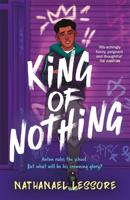
A teenager looks beyond his playground reputation, and realises that it’s better to be loved than to be feared.
Plot summary
Anton has a reputation as king of the school, flanked by his budding gang – Caleb, Marcus, and the bravado of Kehinde. His dad went to jail when he was young for a violent attack, and that reputation has followed Anton around. He’s now raised by his mother and grandmother, and after he gets into trouble at school, his mum forces him to join the local “Happy Campers” youth group.
Initially sceptical, he finds joy in the group when he’s paired with Matthew, a nerdy optimist he’d previously looked down on as a loser. Anton has an allergic reaction to a bee sting, and Matthew comes to his aide – so as repayment, Anton offers to help make Matthew cool and help him impress girls.
Anton’s childish ideas backfire, and he realises that he’s not the one who has his life together. A talk at the youth group helps change his views on gender and masculinity, and he sees the misogynistic path he was on.
In a parallel thread, Anton’s father is released from prison, and Anton has to reconcile the man he’s idolised with the reality. He sees his father’s cruelty and misogyny, contempt for his mother, and sees his mandem “friends” going down the same path. This leads to a clash, with his old gang trying to destroy a church he was restoring before breaking up for good.
Anton realises that he was never respected on the playground – he was feared. Spending time with Matthew, he realises he’d rather be loved. Matthew starts dating Fernanda, and Anton’s growth impresses Rochelle, the girl he has a crush on.
Why I enjoyed it
There’s a powerful moment when Rochelle talks about Anton’s “gang”, and he’s visibly taken aback by the term. On another occasion, he sits with her and her cousin on the bus, and the two girls refuse to talk in his presence. In both cases, her disapproval cuts deep.
At this point he doesn’t quite understand what’s happening, but he’s getting it. His realisations about toxic masculinity and misogyny feel earned – they don’t just come from a textbook; he sees the effect he has on other people, and how it hurts him as well. Kehinde and his father are excellent foils, and the way they talk about Anton’s mother push him in the right direction.
The book reads as a realistic perspective of a teenage boy – everything at school feels terribly important and permanent, adults are regarded with deep suspicion, girls are mysterious. He has a very distinct voice, and his voice felt like how a Black teenager would talk in 2024. Although I haven’t been a teenager for a long time and I don’t know any current teens, it was easy for me to understand how Anton was feeling.
It’s a fun story and the growth is justified. I want to read other stories by this author.