Leave the World Behind (2020)
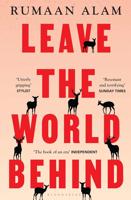
A grim and sticky story set amidst an unknowable disaster.
Amanda and Clay are taking a holiday with their children Archie and Rose, leaving the city for an isolated rural retreat. They’re cut off from their work, their stress, their distractions – until G.H. and Ruth appear at their door, an older Black couple who claim to own the home they’re staying in. There’s a major power outage in the city, the phone and television networks are down, and they don’t know what’s going on.
Gradually the group of uncomfortable strangers realise that something is very wrong. They see hundreds of animals fleeing the area; they hear the silence of empty skies; they’re stunned by a mysterious noise (later explained to be a microwave weapon). It’s a story about how the group react to strangers, react to each other, and to the void of information.
I liked the sense of ambiguity. We know that a major attack has happened against the United States, and we get glimpses as we see how it will affect individuals that the group knew, but we never learn the full details of what happened. The ending is ambiguous about what happens to the group, but whatever happens it’s clear that life as they know it is over.
I was going to describe the prose in this book as “visceral”, but I think “sticky” is a better term. The text is very literal and descriptive about human bodies and physical experiences, in a way that was a bit jarring at first. It’s not unsettling or wrong, but more detailed than I’m used to.
I’m not sure how I feel about this book. I was compelled to keep reading, but it was such a grim story I’m not sure “enjoy” is the right word.
Quotes and highlights
Page 3, as they’re setting off on vacation, and Amanda wants to feel useful even as she’s trying to disconnect from work:
“I’m so sorry to bother you—” Jocelyn’s syncopated breath. It was less that Amanda was fearsome than that power was. Amanda had started her career in the studio of a temperamental Dane with a haircut like a tonsure. She’d run into the man at a restaurant the previous winter and felt queasy.
“It’s not a problem.” Amanda wasn’t magnanimous. The call was a relief. She wanted her colleagues to need her as God wants people to keep praying.
Page 74, Amanda reflects on the nature of parenting, with parallels to living through a disaster:
Rose was at the kitchen island with a bowl of cereal. Amanda remembered (it was not so long ago) when the girl had needed adult intercession to fetch the bowl, fill it, slice the banana, pour the milk. She had tried not to resent it at the time; she had tried to remember how fleeting those days were. And now they were gone. There was a last time that she had sung the children to sleep, a last time she had wiped the feces from the recesses of their bodies, a last time she had seen her son nude and perfect as he was the day she met him. You never know when a time is the last time, because if you did you could never go on with life.
Page 124, Amanda and G.H. are discussing their backgrounds, and this snippet stood out to me:
“I guess it’s like having a green thumb. Or being good at doing the Rubik’s cube. Some people can make money, some people can’t.” She knew who she and Clay were.
This was one of G. H.’s hobbyhorses. “That’s the conventional wisdom. You have to ask yourself why that is. Who wants you to believe that it’s not possible to get, if not rich, at least comfortable? It’s a skill. You can be taught. It’s just about information. You have to read the paper. You have to listen to what is happening in the world.” Of course, he thought you had to be smart, but he considered that a given.
Page 126, there’s a description of an indescribable sound that sweeps over the house:
She was sitting there, not doing anything more, when it happened, when there was something. A noise, but that didn’t cover it. Noise was an insufficient noun, or maybe noise was always impossible to describe in words. What was music but noise; could words get at Beethoven? This was a noise, yes, but one so loud that it was almost a physical presence, so sudden because of course there was no precedent. There was nothing (real life!), and then there was a noise. Of course they’d never heard a noise like that before. You didn’t hear such a noise; you experienced it, endured it, survived it, witnessed it. You could fairly say that their lives could be divided into two: the period before they’d heard that noise and the period after. It was a noise, but it was a transformation. It was a noise, but it was a confirmation. Something had happened, something was happening, it was ongoing, the noise was confirmation even as the noise was mystery.
Understanding came after the fact. That was how life worked: I’m being hit by a car, I’m having a heart attack, that purple-gray thing emerging from between my legs is the head of our child. Epiphanies. They were the end of a chain of events invisible until that epiphany had been reached. You had to walk backward and try to make sense. That’s what people did, that’s how people learned. Yes. So. The thing was a noise.
Not a bang, not a clap. More than thunder, more than an explosion; none of them had ever heard an explosion. Explosions seemed common because films so often depicted them, but explosions were rare, or they’d all been lucky to be spared proximity to explosions. All that could be said, in the moment, was that it was noise, big enough to alter forever their working definitions of noise. You’d cry if you weren’t so scared, surprised, or affected in some way impossible to understand. You might cry even so.
The noise was quick, maybe, but the air buzzed with it for what seemed like a long time. What was the noise, and what was the noise’s aftereffect? One of those unanswerable questions.