Lifeboat at the End of the World (2026)
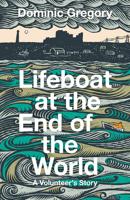
A gripping, raw account of a lifeboat volunteer at Dungeness, dealing with some of the most tragic and politically-charged rescues of the modern RNLI.
I bought this book because I was expecting another feel-good story about the RNLI – accounts of different rescues, some mild peril, but the shout is a success and everyone lives happily ever after. Light, fluffy, no real sense of danger or tension.
This book is not that, in a good way. It’s a story of Gregory joining the lifeboat crew, the gradual gain of trust and respect among the existing crew, the fallout from the small boats crisis, and a testament to the long-running coxswain Stuart Adams. It also weaves in the history of Dungeness, the lifeboat station, and some of the artists who worked in the area.
The story of becoming lifeboat crew is packed with little details, like the walk to the station, the use of second-hand “yellows” and boots, the piece of paper with the tea/coffee preferences, or how the location of your locker tells whether you’re trusted to go out on the boat. It’s a less glamorous, more human description of being a lifeboat volunteer.
I was enjoying the book throughout, but it really picked up towards the end. The lifeboat crew are involved in more and more rescues of small boats crossing the English channel, and dealing with events where they’re picking up dozens of people, a scale they’re not prepared for. They face pushback in their community, criticism from politicians far away, and self-doubt among the crew.
I was particularly struck by one conversation, where an unnamed man from “The Institution” explains what to do in a mass casualty event – they must triage casualties and accept they can’t save everyone, the antithesis of former lifeboat philosophy. The book as a whole treats the Institution as a distant thing, separated from the day-to-day of running the lifeboat station – a background entity, not front-and-centre.
The description of the foreshadowed mass casualty event is a stunning piece of writing, which captures the energy and danger of the night. It’s not a pleasant event to describe, but I was glued to the page, and the book captures just what a toll it took on everyone.
Towards the very end, it becomes clear that the coxswain, Stuart Adams, is near the end of his life. Throughout he’s been described in detail – a trusted leader of the crew, firm and calm, trusted by all around him – and I shed a tear when he finally passes away. It’s a lovely tribute to his life and work.
I really enjoyed this, and it’s my favourite memoir of lifeboat work.
Quotes and highlights
Page 60 has the first anecdote I wrote down about Stuart Adams, one of many which emphasise his skill and grace as a leader:
‘Slow is pro,’ Stuart Adams urged whenever he saw us working with undue haste. Rushing was against both his nature and his build. He seemed to prefer an easy life, but that was only half the story. Rather, he wanted time to think, to turn events over in his mind, to find a safe way home. Early on, he told me that being at sea was like playing a game of chess; that he always had to think several moves ahead. Otherwise one day the cunning ocean would surely get the better of him. Taking it slow was his gambit. Like a king carved from solid ivory, he moved stately-like, one square at a time.
He’s described in more detail on page 68, and this paragraph especially stood out to me:
[Stuart Adams] never took this authority for granted. If one of the crew suggested an idea, he rarely dismissed it but would listen and rub his chin thoughtfully, even if it started and ended a poor suggestion. Or else, when it turned out to be good after all, he never claimed it as his own but was quick to let it be known to the rest of the crew to whom it rightly belonged. Moreover, he did not think it beneath him to get his own hands dirty. Stuart Adams never asked someone else to do a job he was not prepared to do himself.
Page 89 describes the station’s Shannon class lifeboat, with both technical detail and a lyrical flourish:
Ours was A Shannon class lifeboat, named after the mighty Irish river and invoked daily during the shipping forecast over the long-wave radio. She was an all-weather lifeboat designed to go to sea in all but the harshest conditions. And while not the largest or fastest boat in the Institution’s fleet, she belonged to our station. We were proud of her. Furthermore, she had been born and bred on Dungeness.
[…]
She also creased time and space, like the folds in a paper chart, making the once impossible possible. Faster than almost anything else on the water, she seemed to halve distances and, if necessary, could cross the Channel in little over an hour where once it would have taken her predecessors at least half a day.
Page 91 highlights the impact on volunteers’ families, with a note on a strange international aspect of working at Dungeness:
In case of the pager sounding in the night when my wife was away with work, I would leave a postcard for our daughter on the dining table, telling her what to do in my absence: to make herself something to eat, to put the telly on if she needed company, to take care.
I felt guilty for leaving her, though no less than I would have done had I not. If we were returning in daylight, I called her from the lifeboat on my mobile and, since we were still so far from land, heard the unfamiliar dial tone of a foreign country before she answered.
and later on page 97:
Recessed into the walls and beneath the seats are a series of lockers, wherein small but essential items are stowed: […] If needed, the lifeboat even carries a French phrase book; once we are at sea, Boulogne becomes the closest city.
As a techie, I’m unsurprised to hear about the degree of redundancy involved on page 118 (which again has an emotional coda; this is more than a mere technical description):
The lifeboat’s electronics were supported by a constantly whirring and ticking server bolted to the hull. Through each seat screen, you control the engine, the commu-nications, the navigation and almost everything else. All but the steering, which was limited to the helm and the outside wheel.
Next to the first server was an identical one in case the first goes down. If the second server failed, individual servers beneath each seat would take over. In the unlikely event they also failed, the lifeboat could be controlled manually and steered from the engine room by the mechanic. Similarly, the navigator could plot a course with paper charts if necessary. And if the lifeboat really found herself in trouble, the coxswain was there to get you home.
We kept a spare of everything apart from Stuart Adams.
Later there’s a section on the history of naming boats, including this vignette:
When the lifeboat comes alongside another vessel, we ask for a name; not only to share with the coastguard, but also so we can share our own and offer reassurance. After all, we only come to know one another by our names.
As we get closer to the small boat crossings, it’s clear that not every lifeboat crew is in agreement, and some don’t like what the Dungeness crew are doing, as described on page 214. This is a side of the RNLI that doesn’t normally come out in stories about them, because it doesn’t paint their volunteers in such a flattering light (at least, to my eyes):
To join the Institution had been to join many thousands of others who gave time to their own lifeboat. Usually in the summer, we received unannounced visits by crews and their families from other stations: a knock at the door or a spectator on the beach.
‘Do you mind?’ they enquired. ‘Would you mind if we take a look at your boat?’
They might be holidaying nearby or only passing for the day. We made them just as welcome as we found ourselves when visiting theirs. Inevitably, we shared stories with one another, comparing stations and boats and call-outs. This common bond ran through the Institution. Most crews were no less proud of their own lifeboat as we were of ours.
In this spirit, I found myself at another lifeboat station far from Dungeness talking to one of their crew. He was polite but when I told him where I came from, his manner changed. He angrily pulled down the brim of his baseball cap, blinkering himself. Raising his voice, he informed me that the people in the dinghies should not be coming to our country.
‘They shouldn’t be here,’ he insisted, his mind already made up by another.
I did not contradict him. Rather, I tried to describe the scenes we had witnessed in the Channel. As lifeboat crew, surely he would understand? But he shook his head defiantly. It was wrong what we did, he said. When I asked what choice we had – should the crew leave them to drown? – he refused to discuss it and walked away, his station door swinging shut behind him.
And the anger in their local community is just as severe, from page 226:
The anger rippled outwards intimidatingly. On the road sign in front of the lifeboat station, someone had scrawled ‘TAXI’ in large, black letters; many more said it online and in the media. Threats were received and warnings issued. Crew were advised not to wear Institution clothing outside station premises, not to tell people what we were doing. For generations, being on the lifeboat had been something to be proud of; now we felt ashamed. Angry, even.
Two pages later, they’re preparing for the worst:
In the crew room Stuart Adams shakes his head in resignation and says it is not a case of if but when. Nobody disputes this. We have witnessed enough to calculate the odds for ourselves. They do not look good.
Where we used to take a handful of body bags on the life-boat, the Institution recommends we now carry fifty. They are neatly stowed in the fore locker, to be used when we arrive to find the dead floating face down among the wreckage. Enough bags for an entire dinghy.
It’s not all bad; on page 238 we see a community member protecting the dignity of one of a rescued woman from an invasive photographer:
I notice seventy-odd-year-old Judith blocking the narrow gap of the boat hall doors. She is wearing an Institution-issued fluorescent pink tabard and puts herself between the pregnant woman and the long lens of a photographer who has been peering between the doors while the woman lies open-legged on the stretcher.
‘Excuse me,’ she puffs indignantly at the man.
Head high, she stands her ground at little over five feet. She may have a bad heart, but she is also a proud mother and is one of the last surviving lady launchers of Dungeness. She orders the photographer to sling his hook and continues to keep watch until the pregnant woman is carried away to a waiting ambulance.
On page 243, Dominic is chatting to Trev, who used to be the station’s lifeboat mechanic, and I love this passage:
As dusk gathers, we talk about the old days; the people who lived on Dungeness once and those who still haunt the memory. The mood grows melancholy. It is the same feeling as the sound of the wind singing through the telephone wires on the walk home; it is the feeling of standing alone at dusk on the shingle, when it seems as empty as a deserted chapel.
Page 268 and the preceding pages describe that worst-case scenario, a mass casualty event where they can’t save everyone, and the closing line is haunting:
It has taken me my whole life to learn how easy it is to watch someone die.
And page 275 is the final passage I want to quote, which highlights the distinction between what’s experienced on the ground and what’s reported in the news:
Of those aboard that dinghy of 14 December 2022, thirty-nine people survived out of as many as fifty who left France. Many of those managed to climb aboard the fishing trawler [who also came to their aid]; those who could not were rescued by Dungeness lifeboat. And although we saw at least twice as many die, only four bodies were recovered. The news duly reported four dead. None were named.
The rest who died went nameless and unnumbered in unmarked graves. With no evidence of either their life or death, it was as if they had never even existed.