No Matter What (2026)
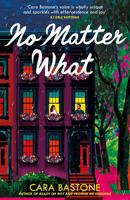
What happens when a car accident shatters your happily ever after?
Plot summary
A year ago, Roz and Vin were in a traumatic car accident, and since then their marriage has been rocky and distant. It becomes clear they’re both dealing with undiagnosed PTSD and are unable to discuss it with anyone, including each other, and a misunderstanding drives a wedge between them.
Roz finds a lease lying around the house and assumes Vin is moving out; while visiting the building for the new lease, she stumbles into a life drawing class. Initially hesitant, she discovers a love of drawing, and starts making friends with the other students. Rather than being a literal reproduction of what she sees, she uses her drawing to tell stories about her emotional relationship to the person. Alongside her narrative, we start to get snippets from Vin’s life, telling the story of how he met Roz to an unknown audience.
After a disastrous accidental date with a fellow student, Roz realises that she still loves Vin and doesn’t want him to leave. They gradually become more intimate as he starts modelling for her and tries to prove his affection, and they talk about what’s really going on.
After the accident, Vin’s younger brother Raff moved in with them for months and the couple aided in his recovery; after he moved out, they were both worried it had driven a wedge between them. Vin got worried when Roz selected a photo for his mother which showed Raff standing between them, and got a lease in case she wanted to end the marriage – but never signed it. Once they start talking, they realise they both want to keep going but thought the other had cold feet. They also realise they both have PTSD, and are triggered by memories or reminders of the accident.
Their love renewed, they attend another picnic together with Roz’s drawing class friends, and Roz discovers that Vin has been attending therapy and going to storytelling sessions at a bar in the East Village. She sneaks in on a night where he talks about the car accident, and they have a thoughtful conversation about being willing to die for one another.
They talk with other people (Raff, Vin’s mother, their picture framer St. Michel) who were aware that something was wrong, and the book ends with their commitment to stay together.
My thoughts
I really enjoyed this, and the inversion of the “happily ever after” tropes. Roz and Vin were happy together, their lives were turned upside down, and it’s hard work to get back to the love they had before. At one point, Roz and Raff are talking, and she describes it as a “fairy tale” marriage – he interprets that as meaning it’s perfect and easy, missing her point that it’s an unrealistic view of what’s happening.
The relationships feel messy and human. There are discussions of love and commitment that go beyond the platitudes and ask what it really means to make those claims. “I’d die for you” – how does that make the other person feel?
I like that the drawing classes help Roz understand her feelings; they’re not just a distraction from her marital problems. She also has a career as a cook, creating meals from leftover ingredients, which felt under-explored – I thought it would be a much bigger part of the book.
I didn’t love this book, but I did enjoy it, and I found it a refreshing form of romance novel.
Quotes and highlights
Page 34, when Roz gets a terrible text from Vin, I wholeheartedly agree with this take:
As much as cooking is my zone of competence, it’s also my zone of confidence. And I really needed to feel confident tonight.
Because this morning I received one of the worst texts that someone can ever send. From Vin: Are you going to be home tonight? I have something to tell you.
I have something to tell you via text message should be illegal. Seriously. You should have to, at least, show up in front of a judge, in your Sunday best, and explain yourself for sending a text like that.
Page 171, when they meet their picture framer St. Michel (who’s involved at several points when he frames special pictures for each of them):
St. Michel’s eyes flick between us. “You two really should stay together.”
[…]
If anything, I’m just a little surprised. This is a different take than he had before. And besides, his nose is rarely even in his own business, let alone ours. “I thought you said breaking up was fine.”
He purses his lips and signals to the server. “It is. But so is marriage. The artichoke tartines, please.” The server salutes and disappears.
“Ringing endorsement of holy matrimony,” I say on a laugh. Vin is now watching him with a lowered brow.
St. Michel shrugs. “It’s all fine. Everything changes any-how. Everyone thinks that their relationship should reach sta-sis. And most of them want it to reach stasis right after they start dating. So they can have that new-love feeling for the rest of their life. How boring.”
“You don’t enjoy falling in love?” I ask him, slightly teasing him now, because he can’t be this over everything.
“Of course I do, but it takes so much energy. If you felt new love the entire time you were married to someone, what a waste of a life.”
Page 178, Vin is telling the story of the first time he met Roz:
You hear smile and you think you know what I’m talking about. But you don’t. Some people have a smile that just … i’s like a knife but in a good way? You see it and it’s like suffocating, but in a good way? It’s something that you can only see in real life, in a real moment, when someone is experiencing actual happiness and calmness and … goodness. And it’s rare. Some of the best actors have come close; you see it on a screen and you think they nailed it. Because they have beautiful smiles. But that’s not what I’m talking about. They can’t actually do it. Because then you see it in real life, this kind of smile, and you realize that an actual smile, a true one… it can only happen when there is truly zero artifice.
She was just happy to see Raff.
Page 221, when Vin turns up at a barbecue with Roz’s drawing class friends, and fellow artist Lauro (who she went on an accidental date with) is quizzing her:
“He seems pretty into you,” Lauro prods me when I don’t answer him.
“Oh?”
“Yeah, he’s looking at you like he’d like to test how flexible you are.”
“He knows exactly how flexible I am.”
“Oh, reallllly.” He chomps grapes with a grin. He’s gotten the information he wanted and now he’s very pleased with himself. “So you two are hooking up? He’s wearing a wedding ring, you ho.”
To lie or not to lie? Which would be more fun? “He’s my husband.”
And now I have the incredible satisfaction of truly gob-smacking Lauro. It almost looks out of place on him. Like seeing a tiger slip on a banana peel. >
“What?”
“Yup.”
“You are married?”
“Yup.”
“To him?”
“Lauro, yes.” Surely, it can’t be that shocking.
“And here I thought I might actually have a shot.” He says it in a friendly way, one that says more about his confidence in himself than anything about our supposed (nonexistent) romantic connection.
Page 222, when art teacher Daniel meets Vin and recognises him from Roz’s sketches:
“Hi!” Daniel says, standing above us.
“Hi,” I say, though I’ve already greeted him earlier:
He’s holding out his hand to Vin. “It’s Mr. Infinity,” Daniel says with a grin. Vin shakes his hand. “Sorry?”
“Nothing!” I fill in quickly.
“I’m Daniel. The teacher. Glad you could make it. Let me know if you ever want to make a few bucks modeling for the class. Oh, Em’s here.” Daniel is waving and wandering off.
“What’s Mr. Infinity?” Vin asks me.
“Oh, it’s really nothing. Just something he said after he saw some of the drawings I’ve done of you.”
“Oh. That person has seen a drawing of my dick,” Vin says, and takes a big bite of his burger. “Not quite sure how to feel about that.”
“If it makes you feel better, that person has probably seen more drawings of dicks than almost anyone else on earth.” I wait a long time for Vin to respond. And then finally …
“Good stuff, he says.
Page 227, when they’re gradually dispersing at the end of the barbecue:
We make it to an old crappy pickup truck parked on Central Park West. There’s a terrible approximation of Starry Night painted across the side.
“Nice,” I tell Daniel in surprise. Somehow it doesn’t quite seem like his style.
“My ex-wife painted it a long time ago,” he explains in a low voice so he doesn’t wake up Sari. His eyes are friendly and sad. His cheek nestles gently into his daughter’s fall of dark hair. “Hold on to that infinity as long as you can.”
Page 239, when Roz and Vin are having a vulnerable conversation about their trauma and PTSD:
When someone is closed off from you, all you can think about is closing yourself off from them. You see their brick wall and imagine how much it would hurt to run into it. But the second you see that door crack open, even an inch … well, you have to open your own door to even check and see, right? And Vin’s done more than open it a crack. Vin’s just used a garage door opener. I could park a pickup truck in that wide-open vulnerability. I’ve just witnessed a true act of bravery. And now all I want is to protect him and reward him at all costs.
Page 244, when Roz and Vin visit Vin’s mother and she gets an interrogation:
“You taking care of my Vin?” Some might view this as an annoying question from a mother-in-law. After all, doesn’t she care that Vin is taking care of me? But of course … she knows Vin. Of course Vin is taking care of me.
“I’m trying,” I say, and if it’s not completely true, I immediately resolve to rectify that.
“You know…” She spots some weeds she can’t resist and gets off her folding chair to kneel in the dirt next to me. “You’re the only one he ever lets.”
“Take care of him?”
She gives one brisk nod. “It was like, his father died one morning and then by that night Vin had decided that he was just going to take care of everything. I was too … I was so … I couldn’t see it… at the time. And by the time I started recognizing the pattern, it was too late.”
“He was already Mr. Take Care of It.”
“But not with you.”
This is so surprising it rings as dead wrong. “Oh, he’s absolutely Mr. Take Care of It with me.”
She’s pursing her lips at me and tossing weeds into my pile.
“He calls you when he has a fever. He wears the clothes you buy for him. He eats your food and asks for more. You make him comfortable. You make him feel at home. And—” She clears her throat. “I relied on him too much. To work. To take care of his brother. Growing up, he didn’t have a place to just … be. To feel at home.”
Page 299, in another difficult conversation, this is lovely:
He’s stroking a hand from the top of my head down to my back. We are so not fighting right now. We are so tender and open. I’s so hard to hold it all at once, the low-lying torrential rain of an emotion that’s been on my heels for a year, and this sweetness for the person I love the most in the world. How do I feel it all? How does anyone live for decades? Life only gets more and more complicated. The good never unmixes with the bad. It only tangles more and more.