Practical Doomsday (2022)
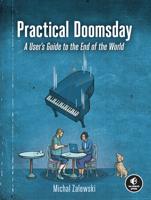
A guide to personal disaster prepping that focuses on pragmatic advice over paranoia.
I picked up this book shortly after attending Monki Gras 2026 “Prepping Craft”; I was looking for practical advice on ways to prepare for personal disasters. The Iran war and energy crisis has thrown this into particular relief for me; at a minimum I expect power cuts and food shortages, and I’m looking at ways to improve my personal resilience.
The book positions itself as a pragmatic approach to prepping; not the radical right-wing doomsday bunkers you often think of when you hear “prepper”. It largely succeeds in that goal, with suggestions that are practical and achievable, not too extreme. At times it got annoying; the author kept making favourable comparisons between their advice and other preppers.
I did find it a bit long and repetitive, and it was a slog to finish.
The advice seems sensible, and much of it aligns with what I’m already doing. I am sceptical of some of the advice, especially their optimism about political turmoil when recent events in the US and UK have gone so badly. The book has a very US-centric perspective, so I had to skim some parts which don’t apply to me.
I read this cover-to-cover but I’m unlikely to do so again; I made detailed notes and will re-read specific sections if necessary.
Notes and highlights
Preface
The author’s background and upbringing:
I remember childhood tales of distant relatives vanishing without a trace, and I recall long lines and ration cards for basic necessities like sugar and soap. Later, when I came to the United States, I lived through the dot-com crash of the early 2000s, and then through the housing crisis of 2007 to 2009. I watched friends go from earning cozy six-figure salaries to having their cars and homes repossessed. I kept telling myself this would never happen to me-all the way until, through a stroke of bad luck, I almost ended up on the street.
And a key mantra of the book:
Prepping shouldn’t be about expecting the apocalypse; it should be about enjoying life to the fullest without having to worry about what’s in the news. Such is the power of having a solid and well-reasoned backup plan.
Part I: Thinking about Risk
Chapter 1: A Method to the Madness:
We think more about rare threats than common ones. We’re more worried about terrorist attacks than falling a ladder. Familiar, established risks vs novelty and uncertainty.
We instinctively zero in on dangers that are unusual or immediate, while paying much less attention to hazards that unfold more slowly or in a more familiar way.
Focus on outcomes, not causes. We want to find the cause of an incident, but there can be many contributing factors and it’s difficult to enumerate or fully explain something.
How do you identify the risks worth worrying about?
The best way to build a robust taxonomy of unknown unknowns without getting bogged down by long-winded hypotheticals might be to take a critical look at your daily routine, stress-testing every external dependency by asking, “What would happen if I could no longer perform this task the usual way?”
Is a risk worth worrying about? Balance the potential impact with the likeliness and cost to mitigate. A stubbed toe and a zombie apocalypse are both minor concerns; a burglary is somewhere in the middle.
It’s easy to fall foul of “crony beliefs” where we’re more worried about appearing wrong than being objectively incorrect. We can get sucked along with a pessimistic narrative, even if it doesn’t hold water.
Chapter 2: The Specter of Humdrum Calamities:
Headlines focus on big spectacles, but the disasters most of us will face are more mundane. These events are also more grounded and human, and more easily shared as anecdotes. Focus on those events, not those in speculative fiction.
Possible causes of a disaster:
- Unemployment and financial insolvency; beware of lifestyle creep
- Loss of home in fire, flood, sewage, and so on; have a “backup life kit” somewhere else
- Loss of utilities and transportation
- Unintentional injuries; it’s always best to avoid rather than respond
- Intentional injury or loss, like a burglary
- Illness or death
When I commuted to an office five days a week and I only had one train line home, I’d keep an overnight bag in the office and crashed with friends in London several times. Here’s a similar sentiment expressed in the chapter:
As with many other risks, a robust financial safety net can take care of many concerns, but so do other, more easily implemented measures, such as being on good terms with family members, friends, or coworkers, and agreeing that you can crash at each other’s place in an emergency. Another simple strategy is having some bare necessities-clothing, cash, documents —stowed away at your workplace or another secure location not far from home.
Chapter 3: Exploring Large-Scale Risks:
The trick isn’t to avoid a fireball or fight the mob, but to be ready to shelter in place and/or evacuate quickly (and know when to do so).
What are the big disasters we should think about?
- Natural and industrial disasters; social unrest
- Financial collapse is not uncommon, and the causes are poorly understood
- Pandemics; it’s hard to know the correct course of actions even in hindsight
- Terrorism is a rare event, comparable to lightning strikes
Chapter 4: Oh No, Zombies!
Popular fiction loves doomsday scenarios, but the risk is often overstated for political gain. Consider doomsday pandemics like smallpox or the Black Death – many people survived; they weren’t the mass extinction event often feared. [The author doesn’t talk about who survived; with many disasters described, money and affluence will improve your odds.]
The risks are real, but it’s pessimistic to imagine humans are incapable of coping. [Once again, London’s air pollution springs to mind; it was initially projected that it would take 193 years to bring NO2 pollution to within legal levels, but it was achieved in 9 years.]
Specific scenarios:
The risk of climate change to rich countries is overstated, who have infrastructure to protect them. Subsistence farming in poorer nations is more at risk, where it’s harder to respond and more volatile. [I disagree with the author; the global nature of food supply chains means rich countries are also affected by crop disruption in the rest of the world. Money can’t buy a failed crop.]
The author dismisses totalitarian regimes as difficult to predict. [This makes me question the author’s complacency elsewhere, because there were clear signs of the risks of a second Trump administration.]
Nuclear weapons are overstated. There’s an intense thermal event when the bomb detonated, but radiation decays quickly. There are Hiroshima and Nagasaki survivors who hid in ditches.
Governments maintain stockpiles of nuclear weapons, but not readiness drills. Don’t look at the flash; stay away from windows; shelter deep inside a building to protect yourself from the initial radiation burst.
The effect of solar coronal mass ejections (CMEs) is unknown. It could affect the power grid, but we’d have days of warning. EMP weapons are likely similar but their effect is unknown as there’s been little public testing. Such a weapon would provoke a nuclear response, so it seems unlikely.
It’s difficult for individuals to prepare for AI or artificial generalised intelligence (AGI). [The book was published pre-ChatGPT so it doesn’t discuss anything related to the current crop of AI tools and their risks, in particular the psychological impact on individuals. That’s a whole new area that this book doesn’t cover at all.]
Don’t be too pessimistic about the risk of doomsday; don’t be taken in by overstated risks and hype.
Part II: The Prepared Lifestyle
Chapter 5: Mind Over Matter
Look for ways to improve your preparedness without spending too much money. Doomsday preparation can be a bottomless money pit. Treat it as a Plan B, not a Plan A.
Chapter 6: Building a Rainy-Day Fund
Have a rainy day fund to protect you from unexpected financial hardship.
Three months is a solid initial goal, six months will weather most financial storms, but there’s no reason to stop there. Unlike other aspects of prepping where you see diminishing returns, more savings means more resilience.
Specific financial advice:
Resist lifestyle creep, and make every transaction count. Look at groceries, subscriptions, insurance, and find ways to reduce spending.
Compartmentalise your savings.
Be more careful of revolving credit, like credit cards [I also thought of Buy Now Pay Later Schemes, which have become more popular since the book was published].
Mortgage and student loans are more static, assuming a fixed interest rate. They’re long-term, have lower interest rates, and less compounding effect. [The primary perspective is from the US; student loans in the UK are effectively a graduate tax these days.]
Chapter 7: Safeguarding Your Savings
The chapter begins with a brief history of currency and coinage, which is mildly interesting but I found of limited relevance to the overall topic of the book.
Then it compares different ways to mitigate financial risk:
- Physical cash. It’s useful for short-term outages and keeps your transactions private, but inflation and the risk of loss means you shouldn’t keep too much on hand.
[I got similar advice during COVID from somebody who’d lived in a former Soviet country. Cash is always useful, but you can’t always assume ATMs will be working or well-stocked.] - Diversified bank accounts
- Bonds, although they perhaps have less value now than they did historically
- Currency spreading is possible, but you need to have a lot of money for it to make much of a difference, and it has less value if you live in a rich country whose currency is unlikely to collapse
- Stocks and index funds They’re not not as risky as gambling despite their reputation; invest for the long-term so you can weather any short-term problems in the market
- Options: treat them like an insurance strategy, not a get rich quick scheme
- Physical goods to be sold in a disaster, like stockpiling soap. It’s hard to predict what will be useful.
- Precious metals: very liquid, untraceable, and hold they value, but they run the same risk of loss as any physical possession
- Real estate: lots of risk, and only becomes worth it if a single property isn’t a significant chunk of your net worth, which isn’t true for most people
- Physical collectibles: same risk of physical gods, and it’s hard to predict what will be worthwhile.
- Cryptocurrencies and NFTs: hard pass. When you’re promised a get rich scheme, think about what happens if you’re wrong, not the potential for riches if you get lucky.
- Insurance policies, separation of assets. This felt especially US-centric; the risk of litigation that bankrupts you in the UK seems lower (but perhaps I’m naïve).
Chapter 8: Engineering a Doomsday-Proof Career
You need job security, because few people can afford to totally retire.
The job market can change radically, so the key is to be flexible. Pick up secondary skills that are useful, and keep learning. Look at your hobbies; compare your areas of growth and stagnation. What’s fun now that might be a marketable skill?
Hobbies can be counterproductive money sinks. I had far too many of these, and to weed out the dead ends, I eventually developed a simple test: I would look back at my projects from a year, two years, or five years ago. Feeling embarrassed and wanting to immediately redo it all would earn the hobby a passing grade; not seeing anything to improve or not knowing how to tackle the flaws would be a sign of a stagnant pursuit.
Chapter 9: Staying Alive
Most people think they’re better drivers than the average, which is mathematically impossible. There are small things you can do to make yourself a safer driver:
- Don’t speed (the benefit of an extra 10mph on the motorway can be wiped out by stopping at one traffic light)
- Take extra care at intersections and lane changes
- Using a mobile phone is comparable to being drunk in terms of the effect it has on your driving
Falls can cause serious injuries, even from a short height. Take more precautions than you think.
Poisoning from medicine cabinets is common. Don’t mix and match; read the labels; be aware of medicines that shouldn’t be taken together.
Alcohol and recreational drugs lead to impaired judgement. They’re definitely bad if you drive, but not great in other circumstances either.
Woodworking and power tools have elevated risks, but they’re often lost in the noise of consumer safety warnings. Always use the right personal protective equipment.
House fires are rare compared to other risks, death even more so. Most people will be traumatised rather than killed. Focus on reducing your risk:
- Good fire and smoke alarms
- Don’t leave cardboard and plastic near heat
- Thin vegetation around your property if you live in a rural area
Chapter 10: Protecting Oneself in the Digital and Physical Realm
Most crime is opportunistic; criminals are look for easy victims rather than targeting you specifically. A small deterrent goes a long way, like a yappy dog to prevent home burglaries.
When you’re a victim of a crime, you’re at a disadvantage. Criminals have done it before and know how you’ll react; you’re experiencing it for the first time.
Digital security: use a password manager and multi-factor authentication. Everybody overestimates their resilience to digital scmas.
Digital security: your adversary is not a nation state actor or the NSA; if they have unlimited resources, get specialist help. That said, consider purging older content; don’t leave a paper trail for stalkers and harassers.
House burglaries are scary: criminals often get in and out quickly, and will search common places for important info. Making your house look occupied can deter casual thieves – leave lights on, or park a car outside.
Don’t let post or newspapers pile up, which can advertise your absence. [How often does this happen in practice?] In the US you can ask USPS to hold your mail; in the UK the service you want is Royal Mail Keepsafe.
If you’re in a violent crime, don’t try to be John Wick. Criminals rely on your sense of compliance, giving you instructions while closing the gap. You can say something unexpected to widen the gap and escape, but it needs to be a rehearsed response! The author also mentioned pepper spray and defensive weapons; that’s less relevant in the UK.
Pickpocketing is declining in many areas because less people carry cash. As a tourist, prevention is easy – don’t leave valuables in easy to access locations.
Being kind is a survival skill, because it reduces your risk of retribution from somebody who believes they were wronged.
Chapter 11: Getting in Shape
Physical health is a survivalist skill.
Miracle diets or fads are hard; they treat what should be a marathon like a sprint. If you want something effective, try cutting portion sizes in half, or look for options that make you feel full quickly. It’s more difficult to achieve weight gain by exercise than reducing calories.
Chapter 12: Building Community
Many peppers want to go solo, which is a mistake.
Community makes you more resilient. Don’t be annoying about your preparation – in many short-term disasters, you can be a benefit to and benefit from your community.
Building a community now can pay off even if a disaster never occurs.
A week-long power outage is a fantastic opportunity to make friends and support neighbors in small ways; it would be a shame to barricade the door the moment the lights go out, anticipating that they might never come back on.
Chapter 13: Hatching a Plan
Write a playbook for disasters you expect to face (similar to the engineering runbooks we have at work). It’s helpful to plan in advance, because it’s difficult to make decisions under stress.
Things to consider when writing your plan:
- To avoid too much pessimism, write narratives for three scenarios: the optimistic case, the pessimistic case, and the middle ground. middle ground, pessimistic
- What will you do before and during the disaster?
- What are your critical indicators and decision points? When will you know you’re in a boiling frog? For example, during wildfires, a common mistake is having an evacuation plan than you initiate too late. When will you put your plan into action?
- Your plan won’t work for or cover all of cases. That’s okay, but look for common failures. For example, if you spend a lot of time at the office, a well-stocked backup bag kept at home is useless.
- Write a will, and leave instructions on where to find your assets.
Part III: The Essentials
Chapter 14: The Discreet Charm of the Bulletproof Vest
You need gear. Be pragmatic about what’s useful; keep an inventory of what you have and when to replace it
Practice with your equipment, both for your own skill in using it and to find anything defective before it’s an issue.
You probably don’t need a bulletproof vest.
Chapter 15: Water
Water is super important. Recommendation: keep at least 72 hours worth in reserve, adjust based on the local likelihood of drought and outage. You want about a gallon per person per day.
It’s bulky to store! Pick strong bottles that are unlikely to leak, fail, or leech microplastics.
You need at least some to be portable, enough to get you to a good location. Consider water purification tablets if that’s a long way away.
Potable water can last a long time, but it can degrade – for example, sunlight can cause algae and pathogens to form. Consider rotating your water every few years.
Chapter 16: Nourishment
Modern agriculture is a marvel; it enables a degree of reliability not possible with subsistence farming – but it’s not immune to supply chain shocks, so you should keep a personal stockpile.
A balanced diet is important, but can be tricky to make work in a stockpile. Consider throwing in multivitamins or protein powder to supplement.
Do you keep a stockpile reserve or a rolling buffer? A rolling buffer has appeal and means less food waste, but may be harder if you don’t cook often (!), and your food may be less suitable in emergency. For example, it’s tricky to carry and eat a bag of potatoes when hitting the road. Think carefully about storage – the book has specific tips for storing dry food, cans, preventing air and water ingress, rodents, heat.
It mentions the usuals: pasta, rice, sugar. Consider tinned foods, including butter and cheese. Snack bars are calory dense, but a poor foundation for a long-term diet.
Emergency ration bars and freeze-dried meals. These are more aimed at preppers specifically and invite snarky comments, but they have their value.
Homestead farming is a non-starter. You need to harvest about a ton of potatoes a year to make up one person’s calory intake; there’s a reason we developed modern agriculture.
Chapter 17: Sanitation, Hygiene, and Health
Sanitation is super important!
- You can flush a toilet with water if you have it. If not, put solid waste in a bin bag, optionally with cat litter to dry it out. Consider adding a roll of toilet roll in your bug-out bag.
- What about flooding? Pumps are useful but rely on power. If flooding is a risk, consider sandbags, absorbent “socks”, or water barriers.
- You don’t need to get fancy with DIY cleaning products. Work smarter, not harder – use disposable plates, so there’s no washing up. A clean rag and extra bottle of favourite cleaning spray and dish soap should get you through plenty
- Personal hygiene: there are low-water products like wipes and antiperspirants. Consider what part of your bathroom supplies you want spares of, like toothpaste.
- Keep a stockpile of regular medication if possible, although it requires careful negotiation with doctors.
- Basic injuries more likely than traumatic events. Have plasters and painkillers over treatment for infected gunshot wounds or zombie bites.
- First aid training is useful, but needs practice and muscle memory. If you don’t have that, get a good first aid guide to have handy.
Chapter 18: Fuel and Electricity
How do you survive a few hours of days without power? (This chapter covers short-term disruptions to utilities, not a major catastrophe.)
Energy is important, but at time of publication it wasn’t cost effective to have energy independence, unless you have lifesaving equipment or essential medication. The book was written in 2022, and acknowledges that advances in solar and battery technology will change that, and maybe it’s already here in 2026?
Electric torches are better than candles, which are an unnecessary fire risk. You only need a small amount of illumination for a home.
For small electronics, battery backups are good, and an idling car is an easy way to top them up. That can be enough to get you connected, if cell towers are outside the outage area. If you want a gas generator, beware the risks of storing gas, and rotate it to prevent decay.
Heat is important, but blankets and huddling together will be enough in most dwellings if you stay indoors. Think about dripping the tap to keep your pipes from freezing. Portable heaters are also an option, but beware the fire risk.
Heatwaves kill more people than freezes. You want lots of water, and less food. Consider swamp cooling if your humidity is in the right range. Remember fans are useful for sweating rather than airflow.
Don’t make plans assuming you can cook during an outage; just let it go.
What about travel? Always keep your car at least half-full, or consider a cart or bicycle. In a major disaster or fuel crisis, assume you won’t get far.
Chapter 19: Household and Vehicle Yools
Basic tools for household repairs and consumables (batteries, screwdrivers, pliers) are useful even in minor mishaps.
Tools like a crowbar, chainsaw, and power pullers are useful in bigger incidents. Pay close attention to the safety information, especially if you don’t use them often! For example, wood can be under a lot of tension when elastic, and can spring back unexpectedly when you cut through it.
Many other power tools deserve deep reverence; for example, planers, jointers, miter saws, routers, and lathes are well-known for mangling the extremities of tens of thousands of people every year. Similarly, many gruesome injuries and deaths are attributed to outdoor equipment such as lawnmowers, snowblowers, wood chippers, and chainsaws. When operating such devices, always follow all the applicable safety tips. If the manual is too obtuse, look up reputable tutorials and accident reports on the internet. Perhaps the most general safety principle can be borrowed from the world of firearms: when working with tools that can maim in the blink of an eye, always make sure that at least two separate things need to go wrong before any serious harm can occur.
In your car, it’s helpful to have a spare tyre, puncture kit, road flares, chains, a battery kit maybe (but summer heat can damage the battery chemistry).
Chapter 20: Evacuation Gear
When you need to leave your home, shelter is usually better than wilderness.
How far can you travel in a day? 10 miles on foot, 30 by bike, 100–200 in a car with a half-full tank. Adjust your plans accordingly.
Unexpected bug-outs are different to camping. When you’re camping, you know the route and location, and can pack exactly what you need. You don’t have that luxury in a disaster.
For winter, tight fitting base layers are better than loose top layers. You need to stay dry, so you want a good raincoat.
For summer, you want sunglasses, a hat with a brim, sunscreen, and water. If you need to avoid the sun by travelling at night, bring torches.
Food and water are vital. Living off the land is difficult and unlikely. If you can find water from a stream or a lake with water purification, that’s a good bet. Bring a stove or fuel; a few bic lighters are fine for starting a fire, you don’t need to learn complicated firelighting techniques.
People have lots of opinions on knives; the book argues a basic knife is fine. It’s a versatile tool with many uses; remember it’s a tool, not a weapon. Pay attention to local laws around carrying knives.
I skipped most of the discussion of US knife laws, but I was amused by this passage:
Picking on California again: a folding knife of any length can be carried concealed (for example, inside your pocket), but any fixed-blade knife must always be in plain view. If you’ve ever purchased any pointy cutlery and carried it to the car in a shopping bag, you might be a violator of Penal Code 21310, eligible for up to a year in county jail.
Chapter 21: Protection Against Pollutants and Disease
We know how to protect against forms of disease.
- If it’s airborne: avoid crowded indoor spaces, and mask when you have to.
- If it’s spread from skin-to-skin contact: wash your hands regularly, and don’t touch your face.
Hazmat suits or positive pressure suits like in the movies are rarely necessary.
To combat insects and rodents: prevent ingress, use insecticide or traps, prevent easy breeding or resting grounds.
If there’s an industrial accident nearby, bin bags and duct tape on your windows will mitigate the risk. Respirators are suitable for more serious events, and compact ones are available.
Nuclear explosions aren’t like in movies; the danger falls away quickly. If you can shelter indoors for a few days, stay inside behind mattress or blankets to absorb radiation, and minimise going outside, that gives you most of the protection you can get.
Chapter 22: Emergency Communications
What happens when communications go down?
Ignore high-tech prepper widgets which are unlikely to work under pressure. If old-fashioned: agree on a list of fallback locations, print and laminate it, then make your way there.
Prefer satellite messengers to radios. They’re cheaper, get better battery life, and are more consumer friendly.
Handheld radios don’t make much sense; they won’t be used for most official channels; they have limited range; they’re more likely to be an apocalyptic Facebook or Nextdoor rumour mill. An AM/FM radio receiver will be more useful.
You can extend your hand-to-hand radio range by getting higher, by using a repeater, or by befriending other local radio operators and asking them to pass a message along. Check local licensing restrictions and laws on use of personal radios.
Stationery equipment can broadcast further, but the portability and price make it infeasible for personal use.
Chapter 23: Entertainment and more
Think about passing the time. A small library of games, books, and electronics can help keep everyone calm and comfortable during a criss.
Consider having a stock of “party favours” – small, inexpensive things you can give away to people during the crisis. It helps people see the value of prepping, and they’ll feel better about you and be more inclined to help you in future.
Part IV: Active Self-Defense
Chapter 24: The Politics of Putting Up a Fight
The need for active self defence is rarer than what many peppers believe. In most situations it’s best avoided, and drawing a weapon may increase the risk of violence.
You also need to think about the legality of self-defence and weapons in different parts of the world; the author discusses US gun control laws.
Plus legal concerns in many parts of the world Author discusses US gun control laws
Chapter 25: Standing Up for Your Belongings
In general, laws allow more self-defence when protecting life and limb than when protecting property. Your responses must be proportionate; grievous harm or Home Alone-style traps will cause you more trouble.
Prevention is better than cure. Deterrents like visible alarms, locked doors, or a noisy dog go a long way to protecting your possession. If you get contents insurance, make sure you itemise everything valuable .
Getting full coverage with alarm systems can be tricky. Simple approaches like prickly bushes under windows, locked doors, or shatter-resistant window film will do a lot, but nothing will stop a determined burglar.
Chapter 26: Fighting for Your Life
Your goal is to prevent violence. Sometimes threatening retaliation is enough to scare off a would-be burglar, but what if they call your bluff?
The legality of carrying weapons varies around the world; UK law is especially strict on this point.
Martial arts take a long time to master and may not have the desired deterrent effect, because your skill isn’t obvious. That’s not to say don’t learn them, but understand you’re making a big commitment.
The book describes various weapons like pepper spray, stun guns, air rifle, deadly weapons – I only skimmed this section because all of those are illegal in UK. If you are using a weapon or implement of any kind, remember that many require close proximity and can be taken out of your hands.
Chapter 27: Understanding Firearms
Guns!
Considerations when selecting a gun:
- Capacity – you won’t be very accurate, so you want enough bullets to actually hit your target
- Range – it’s way shorter than you think for any sort of accuracy; a handgun is maybe 10 yards max
- Recoil – more portent cartridges may seem tempting, but if they’re harder for you to fire, you’ll get less practice on the range and won’t be able to use it safely
- Reliability – are you practiced with what goes wrong? Are those skills muscle memory you can produce in an incident?
- Portability – can you carry it in a bug-out kit?
Firearm safety rules:
- Always assume a gun is loaded
- Never point a gun at anything you aren’t ready to shoot
- Always check what’s behind your target
Firearm storage: balance security with ease of access. Cheap devices often limited protection but can be very frustrating when you need your firearm. If you have children, consider showing them firearms early so they’re less mysterious, and they can start learning the safety rules.
Practice is important so you get the feel of your firearm; visit a range until you’re comfortable using it. Wash your hands after you do, to minimise lead exposure from ammunition.