Strange Buildings (2026)
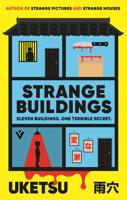
A collection of mysteries and buildings that appear unrelated, but weave together into a gorgeous mystery.
I really enjoyed this, and I raced through it. It’s presented as eleven files prepared by the author, each describing an unusual building they’ve been shown. Initially the files seem disconnected, but we gradually realise they’re all part of the same story and the different horrors weave together.
Each file works well as a standalone story, introducing a new character and their building. There are plenty of illustrations – especially floorplans – which helped me understand what they were describing, in a much clearer way than prose. Several of the reveals were especially effective when I could see them in front of me.
I like that each file comes with some degree of resolution, but with some intrigue to keep me hooked. The narrator explains part of what’s going on, then highlights a gap in the story to return to later. “Everything makes sense, but what about this thing?” I absolutely raced through the book, because I wanted to keep reading.
The stories were presented in a good order – starting with a somewhat mundane mystery of a hallway that led to nowhere, and gradually climbing into cults, murders, and child abuse. (This book gets very dark; it’s not one for the faint-hearted.)
As with all the best mystery novels, I felt this “played fair”. There’s a long section at the end where the narrator explains how everything fits together, but it didn’t introduce any new information or major twists. All the facts are presented in the preceding sections, and I feel like it was possible for me to work it out before reading.
The only reason I didn’t finish this faster is because I was reading it late at night, while alone in my house, and I was sufficiently unsettled I didn’t want to keep reading!
This is the third book by this author, and I’ll definitely be checking out their other works.
Notes and highlights
File 1: The Hallway to Nowhere. A woman’s parents built their house with an empty hallway, separating their bedroom and their daughters’s bedroom. The hallway was a dead end; no doorways or windows. Their daughter speculated that she had a twin sister who’d died in birth, and they’d changed their plans to remove her room.
The author realises it was a different reason – that hallway was the original location of the front door, but a young boy was killed on the main road during construction, so the front door was moved to avoid opening on to the site of the death.
But why did the mother later plan to remove her daughter’s room?
File 2: Nurturing Darkness. A family of three is found stabbed to death – a boy, his mother, and her mother-in-law. The house is poorly-designed, with cramped rooms and no privacy or closing doors. The accepted narrative is that the boy killed all three of them, but does the story of the murders add up?
The author talks to Iimura, a cleaner who cleared the house after the deaths:
So, a forensic clean-up. Basically, it’s setting people free from a house. Most folks think it’s the opposite. ‘A person leaves the house dirty, and you have to clean the house up.’
That’s like saying houses come before people, which is bollocks. Houses are there for people, not the other way around. People always come first. That’s something I learnt as a builder, and I keep it in mind in this work, too.
When it’s time for the departed to move on, whether it’s to heaven or hell, if any bit of them is left in the house, it’ll hold them back, see? So, we go in and scrub it all from the house, so they’re free. That’s the job, as I see it. Interesting, right?
File 3: The Watermill in the Woods. A young girl finds a watermill with a wheel, but no nearby water – instead, the wheel moves an interior wall, revealing two alternate spaces inside the structure. She finds a dead female egret inside, and wonders what it was used for. When she asks the adults in her life, they refuse to talk about it.
Was it a torture chamber? A prison? She finds a tiny alcove in one wall – perhaps it’s designed to force somebody into that alcove, so they face the shrine of the goddess outside, a means of forced penance? Who built it?
File 4: The Mousetrap House. A girl from a relatively poor family is invited to a rich girl’s house under the pretence of a shared interest in manga – but her friend doesn’t have any manga books. She meets the grandmother going to the toilet in the middle of the night; the grandmother falls down the stairs and dies the same evening. Was that an accident, or was the house deliberately engineered to have a gap near the toilet where she might fall?
File 5: The House Where It Happened. A man discovers his rural house is a place where a woman’s corpse was discovered, but whose, and when? He looks up local history, but finds no mention of it. There’s a thorny history with a local businessman – his wife was a golddigger, he had an affair with a maid, and the wife ordered the maid’s murder.
The author talks to his editor Sugiyama about the difficulty of discovering local history:
At the last publisher I worked for, I was assigned to a rural history magazine. An older worker told me, ‘If you really want to learn about the countryside, forget the internet.’ He insisted that all the rural organizations holding the historical information we were interested in are made up of older people, and they just don’t put their information online.
They aren’t interested in digitalization or any of that stuff. So it’s no use looking on the net to find out about something that happened out in the countryside.
Honestly, my experience totally confirmed what he said. There were things that I spent hours searching for online to no avail, but when I went on-site I was shocked how much I learnt with barely any effort. It happened all the time.
The author realises the house was built around the watermill. By whom? Why?
File 6: The Hall of Rebirth. A magazine article describes the Rebirth Congregation, a cult in the mid-twentieth century. It’s organised around a woman who’s missing an arm and a leg, similar to a doll found in a previous file. The building is designed around her image in profile. The article is part 1 of 2, and part 2 was never published, so we’re left to wonder what the cult is, and what it’s doing.
File 7: Uncle’s House. This file is journal entries from a young boy who dies of malnutrition and abuse. His mother and father are separated, and his father is implied to be involved with the cult. The mother and her new partner are charged with neglect and imprisoned.
File 8: The String Phone. A young girl can’t sleep at night, so her alcoholic and distant father creates a string phone to talk to her in bed. She gets a weird call from him one evening, and then the neighbour’s house burns down – ostensibly the wife committed suicide by self-immolation.
When she grows up, the girl realises that the string was too long to reach her father’s room, and he must have been in the neighbour’s house at the time of the fire. Her theory is that he murdered their neighbours; shortly after, he became distraught, and committed suicide two years later. He was found with the cult doll and a photo of the boy from file 7.
File 9: Footsteps to Murder. The author meets the sole survivor of the fire in file 8, the young child of the neighbours, now grown up. His theory is that his father burnt down the house to murder his wife; he heard his father’s footsteps upstairs on the night of the fire. Two accounts of the same night point to two different murdered – which is true?
File 10: No Escape. A sex worker gets pregnant, loses her job, sets up a bar, and goes bankrupt. She owes money to the Yakuza, so they house her and her son in a high-end brothel, which has only four women and their children. It’s engineered to prevent escapes; in particular, women are only allowed to leave if they temporarily trade their child with another woman.
The woman next door was missing an arm, and loses her leg in a car accident when accompanying the first woman’s child on an excursion. She sounds like the patron goddess of the cult.
The author realises the interviewee is hiding something, but what?
The interviewee explains one method the Yakuza used to ensure obedeicne:
Each of our rooms had only one window. It opened onto the flat next door.
The windows between flats could be opened to allow conversation, but they also enabled closer observation. If a woman could prove that her neighbour was planning an escape, the yakuza would forgive half her remaining debt. So, in other words, they set them up to watch each other.
But it’s not like you could actually prove something like that. We didn’t have cameras or recording equipment. And as for the whole forgiving debt thing, no one believed for a minute the yakuza would keep their word.
If anything, the whole idea was only effective because it made people afraid of being wrongly accused. Anyway, our neighbour was a decent woman, so I didn’t worry about that.
File 11: The Vanishing Room. Somebody contacts the author about a secret room they found as a child. They both go to the house to investigate, where they find a small room accessible by a hidden door unlocked with a magnet. Inside they find a small doll, the same shape as the house, from the cult the parents were caught up in when the man was young.
Kurihara’s Deductions: It starts with the businessman who had an affair with a maid. He got the maid pregnant; his wife found out, and ordered her death. He built the windmill as a place for the maid to safely give birth, with the alcove a place to conceal her child Yaeko – but the baby reached out an arm as she closed the wall, and lost it.
The “female egret” the young girl found was actually the maid’s body; the adults retrieve Yaeko as a baby and raise her; she flees when she discovers the truth of her birth. Yaeko marries a wealthy businessman, has a child, but then he commits suicide and she finds herself indebted to the Yakuza – who put her and her daughter in their high-end brothel.
The author realises that the brothel’s customers are having sex with the children, not the women. When Yaeko takes her neighbour’s son out and loses her leg in a traffic accident, it’s because he’d stepped out to commit suicide, trying to escape his awful life. Her daughter is favoured by a businessman who owns a construction company, who eventually pays for them both to leave, then marries Yaeko’s daughter.
The building firm struggles after media rumours of the businessman’s affairs (true!), so the daughter creates the cult. She resents her husband for abusing her as a child; she resents her mother for putting her in that situation. She creates a cult around her mother, and the cult is made of people who have children from affairs – the cult promises to assuage their guilt.
We realise that many of the couples described in the book were having affairs and had children out of wedlock; they went to great lengths to keep this a secret. For example, the young boy in file 7 was one such illegitimate child; he’s the same father who commits suicide in chapter 8. He was calling his daughter on the string phone from his neighbour’s bed.
The cult encourages its members to rebuild their house in the image of the sacred mother – Yaeko, with her missing arm and leg – and to situate their illegitimate children in the “womb” of the house. This creates lucrative contracts for the construction company, and explains the unusual house renovations. The daughter forces her husband and mother to go along with the scheme, lest she reveal their crimes when she was young.
The cult is disbanded when a child is killed on a rival firm’s construction site; this allows them to regain market share and the cult is no longer necessary. Yaeko is forced to become a recluse, and her daughter orchestrates her death to avoid her secrets escaping.
The book ends with the confession that the rich girl – Yaeko’s granddaughter – stole her prosthetic leg, so she’d become unbalanced and fall down the stairs. Her parents coerced her into being their accomplice, and the cycle of abuse was continued.