The Day Tripper (2024)
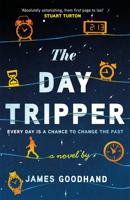
A heartwarming story about a man who lives his life out of order, and how little changes affect the course of his life.
I always enjoy non-linear storytelling, so this was right up my street.
After sustaining a serious brain injury when pushed into the river, Alex Dean wakes up every day in a different year of his life. He jumps back and forward from his early 20s to his mid 40s and sees the different ways his life might have gone.
It starts as a grim picture – his body wracked by poor health choices, no money or safety net, convicted for a crime he doesn’t remember committing, and his teenage sweetheart Holly is dead. Alex learns more about his life. He and Holly drifted apart; he married another woman; she was killed when he was using her as an escape and drunk driving.
Gradually he makes small changes, and those reverberate through his life – the future he lived doesn’t come to pass.
I enjoy the mechanic used to show that his life is changing – telling his mother that he loves her. In a far future scene, she comments on how long it’s been since he said it, so he says it more. She remembers him saying it, and the future where he hadn’t said it for a long time never happens. Small changes stack up to change the course of his life.
Along the way, he meets another man, Defrates, who’s experiencing his life out of order, and they talk about their experiences. Defrates encourages Alex to make these small changes, and take the opportunity for a better life.
(Defrates also offers an explanation that didn’t make any sense to me, but that’s not the point of the book. I have to suspend a certain amount of disbelief at how this would work in practice, because the disjointed memories would surely become obvious quickly. I’m not treating this as hard sci-fi, or the whole concept false part.)
He meets other men along the way, and I like his mantra: “The worst thing our enemies can do is turn us into them”. He’s pushed into the river by a man he knew as a boy, who sexually assaulted him. Every time they see each other, they fight. In their final meeting, the other man stumbles into a road, and Alex saves his life, moments after the man tried to kill him. Mercy breaks the cycle, not fighting.
The changes snowball, and his life changes in bigger ways. In one particularly affecting scene, he wakes up in a hospital bed in April 2020, and Holly is tending to him as he suffers with COVID-19. In another scene, he realises that the memorial where he’s been busking over the years is where his friend Jazz was killed in a homophobic attack, but when the day comes, he helps avert the attack, and the memorial never comes to be.
In the book’s narrative, Alex and Defrates are experiencing this disjointed timeline because they experienced two traumatic brain injuries in the same location. Alex was pushed into the Thames in 1995, and he’ll commit suicide on the same spot in 2024. Defrates can’t see beyond 2028. They’re bouncing between the two dates, but will never go beyond them.
Defrates knows several other historical figures who experienced the same phenomenon, and all of them died from their second brain injury. The book implies the same will happen to the two of them, but it’s not certain – indeed, Defrates is cagey about whether he sees Alex again after 2024. Given Alex has already survived one traumatic brain injury, I’d like to think he can survive another.
This is a story about how we can improve our lives, but we have to make the difficult choice, not the easy one. For Alex, that means reaching out to his friends and family and not seeking solace at the bottom of the bottle. (In another good scene, he asks his mother for help around his alcoholism and childhood sexual abuse; a conversation only possible because they’ve grown closer.)
I really enjoyed it, and it’s made me think about the time I have, how I want to spend it, and the changes I want to make now to enjoy my life in the decades to come.
Quotes and highlights
6 September 1995, age 20, Staying Out for the Summer, when Alex is chatting to Holly before everything gets weird, we get an early clue about the book’s themes (page 13):
I turn and our faces are almost touching. “Meeting you was a…reminder.”
“Right.”
“The world is as wide as the chances that come our way. Take an opportunity, and it leads to more opportunity, and so on. The world opens up, like wings or…something.”
In Head Over Feet, there’s a sweet moment (page 22):
“Don’t be long, baby,” she says, wide-eyed, sincere.
I’m still for a second. It’s so alien, this feeling that nothing else in the world matters beyond this present moment, beyond her and me. I almost say it—would if the words weren’t a foreign language to me. I could so easily tell her that I love her.
On 4 June 2012, age 36, Born to Die, Alex is chatting to his friend Jazz, and starts to get a sense that he can make different choices (page 94):
“How long we known each other?”
“Couple years, maybe.”
“Well, that makes us mates, doesn’t it?”
“Guess so.” It saddens me how that simple statement seems to touch him.
“I just like watching you play, innit. Like chatting to you. You’re cool. Interesting.”
“I’m interesting, that’s for sure. So I’ve never walked home with you, like this?”
He shakes his head, and I’m for once pleased with myself. It seems I’m capable of outplaying my in-order self. After last night, it’s reassuring that I’m capable of any basic human decency.
(The previous night, he’d been dating Holly in 1999, and blew off an evening with her to go drinking.)
Later in the same chapter, a moment of community from the young Jazz (page 98):
Jazz crouches. Surrounded by cigarette ends, a shock of giant daisies has busted through a jagged joint in the ground. The white petals shiver, sparkling with beads of the clearest water. He takes a moment to enjoy their glow, before pinching off three at their stems. “Look good at home,” he says, trying to feed them into his rucksack.
I take the small bunch from him. “There’s loads. Have the lot.”
“Nah. I take them all, no one else gets to see them.”
23 January 2023, age 47, The Loneliest, Alex wonders what happened to Jazz. There’s a bitter irony that he’s leaning against a monument to Jazz’s life, but he doesn’t realise it yet, and at this point in the book, neither did I (page 133):
I look across the concourse at the shop front that was once the wine bar Holly and I sat outside the night this all began. The chocolatier that occupies the place now is still open; beyond the glass, people who look so sharp you’d swear they were European pick treats from iron platters. On two occasions I’ve met Jazz down here. Where is he now? It’s 2023—he’d be twenty-six, twenty-seven, maybe? What sort of man has he grown into? Did he dare to stand up and be clever? Was he brave enough to shine? Be someone? God, I hope so.
Cramp grips and I stagger to my feet. I cling to the granite plinth, central in the concourse, that I’ve been sitting against as I’ve begged. Only, here in the later years I’ve visited, it’s the memorial that I got bollocked for busking on in 2019. Three doves sculpted in thin metal soar from the center on delicate stalks. Polished to a shine last time I saw them, their wings are matte with frost tonight. On the plinth lies a modest bunch of flowers. Pearls of ice stick to red and white petals. It reminds me of the bouquet I bought Holly that perfect afternoon. I cringe at my crass attempt to frame myself as someone with charm. Where did that guy go?
1 March 2017, page 41, Bitter End, marks a low point for Alex (page 213):
The Thames is inviting. I’ve fantasized all day about loading my stinking clothes with rocks. Let the water do the job it so nearly did when Blake Benfield sent me in. But things like that take strength.
Easy way out, isn’t that what people say? Bullshit.
It’s one final act of taking back control, in a life that’s left you with no control over anything else.
Everything I’ve ever done has been an attempt to be in control. And I’ve lost. Even that one last option, of choosing my own exit, I am too weak for right now.
I take a hit of booze, and another after that. It won’t bring the courage I need.
23 October 2008, age 33, With Every Heartbeat, when Alex is more upbeat and chatting to Defrates about how his life is changing, most notably an early release from a prison sentence he was previously still serving (page 222):
“There’s something you need to understand,” he says. “You’re asking me what it is that you’ve done to make this change. What were you expecting the answer to be, I wonder? That you’d done something minutely different? Walked a different way, crossed someone’s path, triggered a change in time’s trajectory from an inconsequential act?”
“Maybe. I don’t know.”
“You’ve seen too many movies, young man.” Trademark patronizing grin. “Time doesn’t hinge on the small details. Change is not effected by a misplaced foot here, a flap of a bird’s wing there.”
“I guess.”
“You’re heard of the butterfly effect?”
“Sure. The theory that a tiny movement of a butterfly’s wing in the past can have a massive effect on future events.”
“Precisely. And I believe that theory to be utter cobblers.”
“Okay.”
“Change, Alex, comes about from a commitment to making a difference. To deviating from the path of history.”
“Walking into the headwind.”
“Exactly!”
The playground deflates as the bell sounds for the end of lunch. I nod at Defrates. “Life doesn’t hang on the small stuff.”
“Indeed. And this life you are leading—it has the potential to update further. Make a change for the better, you see the difference. Just as you have with this early release from prison. Make more good changes, you might reap more benefit. Commit to making real difference, those changes may begin to add up.”
“To a life better lived?”
“You can but hope.” He traps an errant football beneath his foot as the kids file past us. “It’s perhaps not as much effort as it sounds.”
“Constantly pushing against the weight of history? It sounds like effort.”
“Good decisions lead to good decisions, just as bad decisions beget more bad decisions. Worth bearing in mind.”
On 20 August 2019, age 43, Maybe It’s Time, Alex is attending his mother’s funeral. He meets his mum’s sister, Aunty Liv, who explains she was cut off when she dared to contradict his controlling father. As the funeral is wrapping up, he reflects on what Liv said, and walks away from this version of his father (page 256):
I can see it now. Every time I’ve let this man make me angry; every time I’ve boiled with fury for hours and days after his attacks; every time I punched myself in the head till I was bleeding and seeing double; or worse, the times when nothing could stop the tears coming, hating myself with a white-hot fury for my weakness—when I was only letting him win.
The worst our enemies can ever do is to turn us into them.
And When the Party’s Over, Defrates explains everything he knows about what’s happening to them both, and pushes Alex to keep trying: (page 269):
“Just keep living well, Alex.”
“I am trying. I think.”
“Keep it up. Strain at the weight of your history.”
“Keep running into the headwind,” I add.
“Real change is possible, Alex.” His eyes burn into me. “Take the initiative,” he says firmly. “Whilst you know change is possible.”
“You think the opportunity passes?”
“Rot sets in,” he says. “You live a life you’re not happy with for long enough, and it’s possible to forget that things could be different.”
23 April 2000, age 24, Rise, Alex tries to call Holly but gets a dail tone (page 272):
My disappointment evaporates in seconds. It is enough to know she exists. To know she and I are under this same sky, wherever she may be.
And Mum, she’s here too. Probably awake already. In her kitchen, having her coffee. A few miles away.
Perhaps that’s one of the great joys of being young: that everyone you’ve ever loved is still alive.