The Secret Life of Cows (2003)
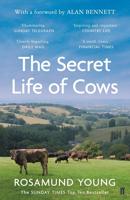
The key thesis is that cows are individuals, even if their individuality looks different from what it looks like for humans. Evidence comes in the form of a fun collection of stories about cows and other farm animals; this was an easy and enjoyable read. Cows are cool!
I think this is a book I picked up from Oxfam? A surprising little gem!
Notes
Rosamund’s parents started the farms in 1953, when she was just 12 days old.
The key message of the book: animals are individuals, but we can’t judge them like we judge humans. e.g. a calf might show intelligence by eating food from under its mothers mouth, to avoid getting muscled out by the other cows – which is much more meaningful than learning to push a button to open a gate.
Intensive farming deprives animals of their ability to live a well-rounded, individual life. You get more stressed animals, worse food, and you miss out on their individuality.
The rest of the book is spent telling stories of various cows and their shenanigans.
Quotes and highlights
P2:
Cows are individuals, as are sheep, pigs and hens, and, I dare say, all the creatures on the planet however unnoticed, unstudied or unsung. Certainly, few would dispute that this is true of cats and dogs and horses. When we have had occasion to treat a farm animal as a pet, because of illness, accident or bereavement, it has exhibited great intelligence, a huge capacity for affection and an ability to fit in with an unusual routine. Perhaps everything boils down to the amount of time spent with any one animal – and perhaps that is true of humans too.
P3:
No teacher would ever expect or want all the pupils in one class to be identical. No one would want to create a society in which everyone wore the same clothes or had the same hobbies. Just because we are not clever enough to notice the differences between individual spiders or butterflies, yellowhammers or cows is not a reason for presuming that there are none.
P17:
Bovine needs are in many respects the same as human ones: freedom from stress, adequate shelter, pure food and water, liberty to exercise, to wander about, to go for a walk or just to stand and stare. Every animal needs congenial company of its own species and a cow needs to be allowed to enjoy her ‘rights’ in her own way, in her own time and not according to a human timetable.
P33:
Recently, we were not exactly sure when young Nell was going to calve so we decided that she and her mother should spend every night in the barn during the preceding x days (x turned out to equal 9). At 4 a.m. she started to calve and her mother watched attentively. After the calf was safely delivered (this having required help from two men), Nell senior, or Gold Nell to give her her full name, came very close, head on one side, and looked at her daughter and granddaughter with great care. She decided that both were fine, and she marched towards the gate and asked to be allowed out. She had not shown even the slightest inclination to go out on any of the nights she had kept her daughter company but tonight, knowing that she was no longer needed, was different. Thereafter she maintained a very active friendship with her newly expanded family.
P36:
Jake soon became the most important animal on the farm – not in his own opinion, however, for unlike most bulls he was not at all conceited. He was magnificent: totally black, rough coated in winter, smooth and silky in summer, always with tightly curled hair on his fore-head. He had neat, strong, black feet and kind, intelligent, knowing eyes. We all loved and admired him, as did the entire herd. He was gentle and never bossy, although three times stronger than everyone else. Even a smallish animal could push him away from a flake of hay. (There are normally seventeen flakes of hay in a bale, weighing about eight pounds each.)
P38:
Jake did have one vice. It was not, however, a vice normally associated with bovines: he loved sniffing the carbon monoxide fumes from the Land Rover exhaust pipe. At first, we did not notice what he was doing. We were accustomed to driving into the fields, loaded to the eaves with bales of hay; ten at least inside and two or three tied on the roof rack. If it was a cold day, as so often, I would leave the engine ticking over while I leapt out to spread a bale, trying to dodge the eager heads and horns and feet. Then I would jump back in and drive forward, repeating the trick at intervals and making sure the hay was fairly distributed over a largish area so that the smaller and more timid animals had plenty of flakes to choose from and were not intimidated by those more self-assured. Jake would see us coming, stroll over to the back left-hand corner of the Land Rover and breathe in the fumes in ecstasy. We realised what he was doing only when one day in his enthusiasm he started to rub his head on the bumper while still breathing in the fumes. He seemed to get carried away and the Land Rover began to rock from side to side. Our verbal remonstrations were to no avail and when I got out to persuade him, physically, to stop I saw what he was doing. After that we always turned the engine off, however cold the weather.
P53:
[Durham] very soon learned to tell the difference not only between men and women but also between two similarly sized men. He never asked the same person twice for food on the same day but if a different person approached him he would try pretending for all he was worth that he had not been fed that day. Quite often this procedure worked.
P57:
One particularly satisfying fact we have discovered is that if the animals have sustained an injury they like to eat quite large quantities of willow. We hope that this is connected to the origins of aspirin. If a willow tree is not growing in a handy place we cut and carry boughs to whoever needs it. Without exception they eat keenly, sometimes on several consecutive days. When they feel they no longer need it they will just walk away.
P100:
As we are largely self-sufficient in food, we notice the taste of milk probably more than the calves do. They always have the same milk, whereas we taste milk from many cows. It is well known that the milk from different breeds of cow has its own distinctive characteristics of taste and quality. A change in diet will also affect milk taste but there is an inherent difference and we have found that even cows of the same age and breed can produce milk with vastly different tastes and widely variable butterfat contents. In the house we label the milk jugs with the cows’ names and we all have our particular preferences.