# web-page-template

This is a template I use as a starting point when I create new HTML pages.

<table>
  <tr>
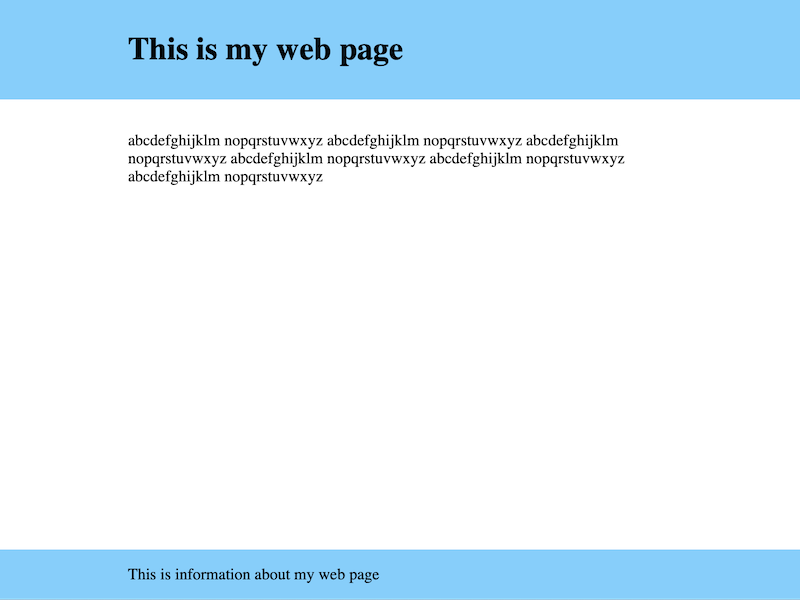
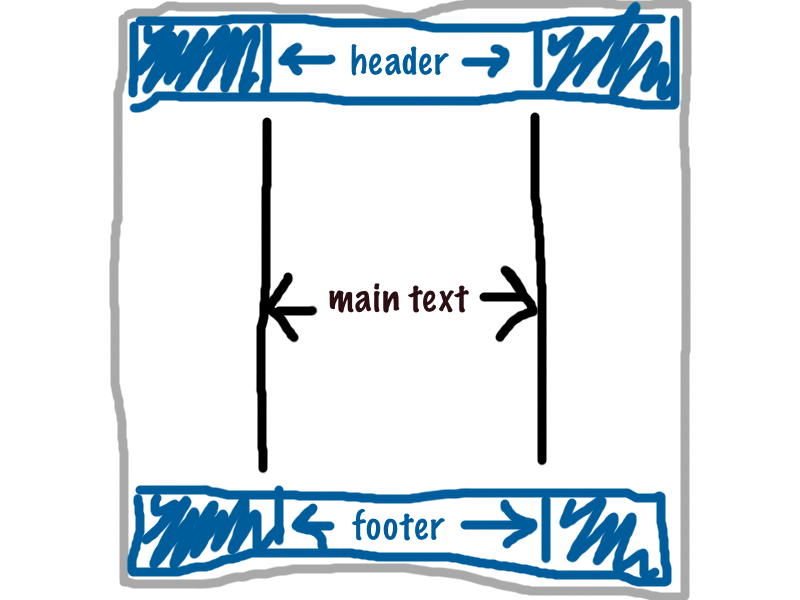
    <td><img src="sketch.png" alt="A sketch of my standard layout"></td>
    <td><img src="screenshot.png" alt="A screenshot fo the layout rendered as HTML"></td>
  </tr>
</table>

Features:

*   My preferred one-column layout for content, which puts a header/footer at the top and puts the content in the middle.
*   The standard `<meta>` tags I want on every HTML page.
*   An example of how to use `<script>` and `<link>` tags to load external files (because I always forget the exact syntax)
## Usage

Copy the contents of `TEMPLATE.html` into a new HTML file.

I have a text expansion snippet in Alfred that inserts this template: when I type `!html`, I get this HTML template.

## Motivation

This layout isn't perfect, but it's pretty good and covers a wide variety of use cases.
I prefer it to the default browser styles you get in a completely new HTML file.

I used to copy the HTML and CSS from project-to-project, but it was difficult to know what was part of my basic layout, and what was project-specific.
I also had no canonical definition of this basic layout, and I didn't apply fixes and improvements consistently.

Creating a single template gives me something a canonical version that's easier to copy/paste.
It's also allowed me to look at this template more carefully, and make sure I'm following best practices.

## Useful reading

*   [The Surprising Truth About Pixels and Accessibility](https://www.joshwcomeau.com/css/surprising-truth-about-pixels-and-accessibility/), by Josh Comeau (2023).
    This helped me understand the difference between pixels and ems/rems for measurements, and when to use which.